
Learning how to convert cm to inches is easy once you know one exact fact. One inch is exactly 2.54 cm, with no rounding in the definition. To find inches, divide cm by 2.54, so inches equals cm divided by 2.54. For example, 25 cm equals 9.84 inches after rounding to two decimals. To go the other way, multiply inches by 2.54 to find cm.
A centimeter is a small metric unit that you see on rulers and tapes. An inch is a small imperial unit that you see in the United States and the United Kingdom. Many products list sizes in both units, but some list only one unit. A TV, a screen, a pan, or a height may use cm in one place and inches in another. This guide shows a clear method that works for all of those cases.
Errors happen when people rush, round too early, or mix up units in a hurry. A small error can make a shelf, a frame, or a screen size wrong by a lot. This guide slows the process down into five simple steps you can trust. Each step uses short math, plain words, and a worked example to check. You can use a phone calculator, paper, or the free tool below.
Divide the cm value by 2.54 to get inches, and round only at the end. For example, 25 cm divided by 2.54 equals 9.84 inches. To convert inches to cm, multiply inches by 2.54 instead. Keep two decimals for most home, school, and shopping uses. Sense check the result, since inches should be smaller than cm.
Cm to Inches Calculator
Enter a value and click Convert.
The Exact Formula for Cm to Inches
The formula is simple, and it never changes for any value you convert. Inches equals cm divided by 2.54, and cm equals inches times 2.54. The number 2.54 is exact, not a rounded guess for most uses. You can trust it for school work, shopping, crafts, and home projects. It also works for very small values and very large values alike.
This exact link comes from the 1959 international yard and pound agreement. That agreement set one inch as exactly 2.54 cm for all countries that signed it. The National Institute of Standards and Technology, known as NIST, uses the same exact value today. Because the value is exact, you do not need to add a small correction later. Your only choice is how many decimals to show in the final answer.
Many people remember 2.54 by linking it to a simple rhyme or a card. You can write 2.54 on a small card, and keep it near your ruler or desk. A phone note with the formula also helps when you shop in a store. The more you use the formula, the faster it feels in daily life. Soon you will estimate a result before you check it with a calculator.
5 Simple Steps to Convert Cm to Inches Without Errors
Step 1: Write the value and its unit clearly
Start by writing the number you have, plus the unit cm, on paper or in a note. This step stops a common mix up between cm, mm, and inches at the start. Check the label again, and make sure the number is really in cm. A tape may show both cm and inches, so read the correct side. A clear start makes every later step much easier to check.
Step 2: Choose division by 2.54 for cm to inches
Choose division when you start with cm and want inches as the result. This choice is key, because the reverse direction uses multiplication instead. Write the formula as inches equals cm divided by 2.54, right next to your value. This short note reminds you of the direction before you press any keys. A wrong direction is the fastest way to get a wild answer.
Step 3: Calculate while keeping two decimals
Divide your cm value by 2.54 on a calculator, and keep full decimals during the math. Do not round to a whole number in the middle of a longer task. For a single size, two decimals give a clear and useful result for most needs. A result like 9.84 inches is easy to read, compare, and use. Keep the full result on screen until you finish the next step.
Step 4: Round sensibly at the end only
Round only once, at the very end of your work, to the decimals you need. Two decimals suit most home, school, and shopping tasks in daily life. One decimal may suit a rough craft cut, but it can hide a small gap. Whole inches may suit a rough guess, but not a tight fit for a frame. State your rounding choice, so others can check your result with ease.
Step 5: Sense check the result before you use it
Check that inches are smaller than cm, because one inch is larger than one cm. For example, 25 cm should give about 10 inches, not about 60 inches. If your result looks far too large, you may have multiplied by mistake. If it looks far too small, you may have used mm or the wrong unit. A quick sense check catches most errors before they cause harm.
Worked Examples You Can Check
A 55 inch TV in cm
A TV size is the diagonal length of the screen, not the width alone. To find cm, multiply inches by 2.54, so 55 times 2.54 equals 139.70 cm. This diagonal helps you compare a TV size with a wall space. Measure your wall space in cm, then compare it with 139.70 cm. Leave room for a stand, cables, and air flow around the TV.
An 80 cm screen in inches
Divide 80 by 2.54 to find the screen size in inches for a shop label. The math gives 31.496 inches, which rounds to 31.50 inches at two decimals. This size is close to a 32 inch class screen in many stores. Check the exact diagonal on the product page before you buy a mount. A small gap can matter for a tight shelf or a wall bracket.
A height of 175 cm in feet and inches
Divide 175 by 2.54 to get 68.897 inches, which rounds to 68.90 inches. Divide 68.90 by 12 to find feet, which gives 5 feet with a remainder. The remainder is 68.90 minus 60, which equals 8.90 inches in total. So 175 cm equals 68.90 inches, which is 5 ft 8.90 in. This form is common for heights in the United States.
A height of 180 cm in feet and inches
Divide 180 by 2.54 to get 70.866 inches, which rounds to 70.87 inches. Subtract 60 inches for 5 feet, and the remainder is 10.87 inches. So 180 cm equals 70.87 inches, which is 5 ft 10.87 in. Many people round this height to 5 ft 11 in for a quick talk. Keep the exact form for forms, sports, or medical records instead.
A 20 cm pan and a 30 cm ruler
A 20 cm pan divides by 2.54 to give 7.874 inches, which rounds to 7.87 inches. This size helps you pick a lid, a burner ring, or a storage spot. A 30 cm ruler divides by 2.54 to give 11.811 inches, which rounds to 11.81 inches. That ruler is close to one foot long, but a little shorter than 12 inches. Use the exact result when you need a precise cut or a fit.
A length of 120 cm in inches
Divide 120 by 2.54 to get 47.244 inches, which rounds to 47.24 inches. This length is close to 4 feet, since 48 inches equals 4 feet in total. A curtain, a shelf, or a board of this length needs a clear space check. Measure in the same unit at both ends to avoid a mix up. Write both values on your note, so the shop can help you fast.

Cm to Inches Conversion Table
The table below shows common values at two decimals for quick checks. Use it for shopping, crafts, and school work when you need a fast answer. For values not in the table, divide cm by 2.54 with a calculator. Always sense check a table value against a nearby value in the list.
| Centimeters | Inches |
|---|---|
| 1 cm | 0.39 in |
| 5 cm | 1.97 in |
| 10 cm | 3.94 in |
| 15 cm | 5.91 in |
| 20 cm | 7.87 in |
| 25 cm | 9.84 in |
| 30 cm | 11.81 in |
| 50 cm | 19.69 in |
| 100 cm | 39.37 in |
| 150 cm | 59.06 in |
| 175 cm | 68.90 in |
| 180 cm | 70.87 in |
Reverse Conversion: Inches to Cm and Cm to Feet and Inches
Reverse math uses multiplication, not division, so take care with the direction. Multiply inches by 2.54 to find cm, for example 10 inches times 2.54 equals 25.40 cm. This reverse step helps when a US product lists inches and you need cm. Write the unit next to each number, so the direction stays clear. A quick check shows cm should be larger than inches in this case.
To turn cm into feet and inches, first divide cm by 2.54 to get total inches. Next, divide total inches by 12, and keep the whole number as feet. Subtract feet times 12 from total inches to find the inch remainder. For example, 180 cm gives 70.87 inches, which is 5 ft 10.87 in. You can also divide cm by 30.48 to get feet as a decimal, then convert the decimal part.
Use feet and inches for heights, room lengths, and large items in daily talk. Use plain inches for screens, pans, and small items that fit in one foot. Use cm for rulers, tapes, and metric plans in school or craft work. Keep one form in a note, and add the other form next to it. This habit helps a shop, a teacher, or a friend check your size fast.
5 Mistakes to Avoid When You Convert Cm to Inches
Mistake 1: Using 2.5 instead of 2.54
Some people round 2.54 to 2.5 for a fast guess, but that guess adds error. For 100 cm, 2.5 gives 40 inches, while the exact math gives 39.37 inches. That gap of 0.63 inches can break a tight fit for a frame. Use 2.54 for real work, and save 2.5 only for a rough guess. A small change in the divisor makes a large change in the result.
Mistake 2: Multiplying instead of dividing
Multiplying cm by 2.54 gives a result that is far too large for inches. For 25 cm, that error gives 63.50, which is not inches at all. The correct step divides cm by 2.54, which gives 9.84 inches. Check the direction before you press equals on the calculator. A sense check will catch this error in seconds, since inches must be smaller.
Mistake 3: Rounding too early in the math
Rounding in the middle of a task can shift the final answer by a small amount. Keep full decimals while you work, and round only at the end. This rule matters most when you convert, then add, then convert again. A small early error can grow across several steps in a plan. Save rounding for the last step, and state how many decimals you used.
Mistake 4: Mixing mm and cm by mistake
One cm equals 10 mm, so a mm value is ten times larger than the same cm value. If you treat 250 mm as 250 cm, your result will be ten times too large. Check the unit on the label, and convert mm to cm first if needed. Divide mm by 10 to get cm, then divide cm by 2.54 to get inches. This two step check stops a very common unit mix up.
Mistake 5: Forgetting that screen size is diagonal
A TV or monitor size is the diagonal, not the width or the height alone. If you measure only the width, you will compare the wrong size with a shop label. Measure from one corner to the opposite corner for the true size. Use that diagonal in cm or inches, and convert it with 2.54. This step helps you buy the right mount, stand, or wall space.
Build Your Own Pocket Chart in Two Minutes
A pocket chart is a small card with your own five values, plus the formula. Pick five sizes you use most, such as your height, a screen, a pan, a shelf, and a board. Convert each size with the steps above, and write both units on the card. Add the formula at the top: inches equals cm divided by 2.54. Keep the card in your wallet, phone case, or workshop wall for fast checks.
Choose values that match your daily life, not random numbers from a table. A cook may pick pan sizes, while a crafter may pick board lengths. A student may pick heights and ruler lengths for class work. A shopper may pick screen sizes and shelf widths for the home. Your own chart feels more useful, because every value has a real use.
Check your card once a month, and add a new value when you need it. Replace any value that you no longer use, so the card stays short. A short card is easy to read in a store, even in a hurry. Share the card with a friend or a family member who also converts sizes. A good pocket chart turns a math task into a quick glance.
Divide cm by 2.54, keep two decimals, and sense check the result. For 100 cm, the answer is 39.37 inches, which is close to 3 ft 3 in. For 10 inches, multiply by 2.54 to get 25.40 cm. Use feet and inches for heights, and plain inches for screens and pans.
Seeing the Measurement on a Tape
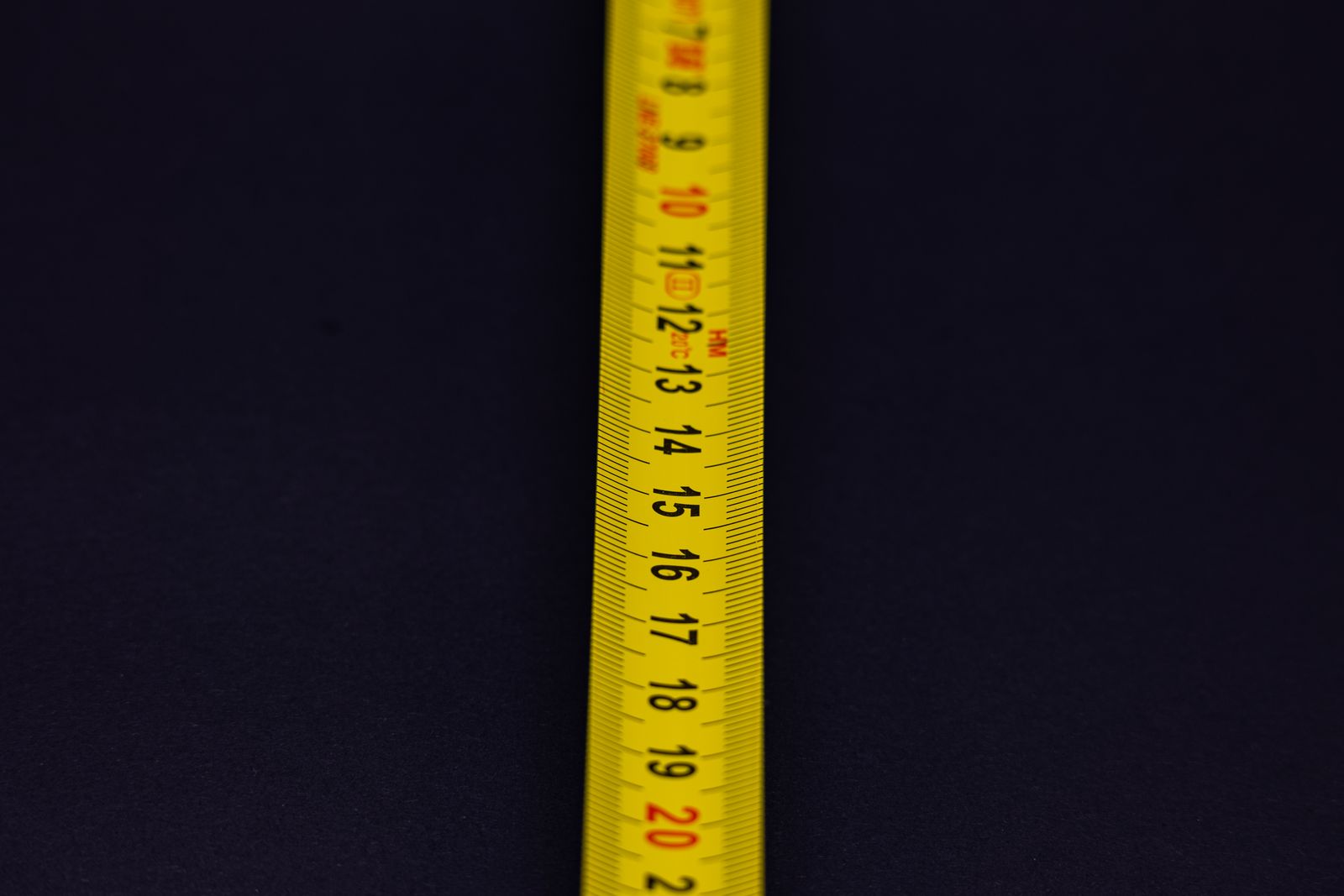
A tape measure shows cm on one edge and inches on the other edge in many cases. Read the cm side first, then check the inch side for a rough match. This visual check helps you catch a unit mix up before you cut. Keep the tape flat and straight, so the mark does not bend. A bent tape can shift the mark by a small amount, and that shift matters for a tight fit.
Frequently Asked Questions About Cm to Inches
What is the formula to convert cm to inches?
Divide cm by 2.54 to get inches, and round only at the end. For example, 50 cm divided by 2.54 equals 19.69 inches. This formula works for any cm value you need to convert.
How many inches is 25 cm?
25 cm equals 9.84 inches, since 25 divided by 2.54 equals 9.8425. Round to 9.84 inches for most home and school uses. This value is close to 10 inches, but not exact.
How many cm is 10 inches?
10 inches equals 25.40 cm, since 10 times 2.54 equals 25.40. This reverse step uses multiplication, not division. Write the unit next to the result to avoid a mix up.
How tall is 180 cm in feet and inches?
180 cm equals 70.87 inches, which is 5 ft 10.87 in. Subtract 60 inches for 5 feet, and 10.87 inches remain. Many people round this to 5 ft 11 in for a quick talk.
Is 1 inch exactly 2.54 cm?
Yes, one inch is exactly 2.54 cm by the 1959 international yard and pound agreement. NIST uses the same exact value in the United States today. No small correction is needed for normal work.
Why do different converters give slightly different answers?
Converters may round to a different number of decimals, such as one, two, or four. Some may use 2.5 as a rough guess, which adds a larger error. Check the divisor and the rounding choice before you trust a result.
How can I convert cm to inches without a calculator?
Divide by 2.54 on paper, or use a pocket chart for common values. You can also estimate by dividing by 2.5, then adjusting a little down. For exact work, use a phone calculator or the tool above.
How many inches is 100 cm?
100 cm equals 39.37 inches, since 100 divided by 2.54 equals 39.370. This length is close to 3 ft 3 in, since 36 inches equals 3 feet. Use two decimals for a clear result.
How many inches is a 30 cm ruler?
A 30 cm ruler equals 11.81 inches, since 30 divided by 2.54 equals 11.811. That ruler is a little shorter than one foot, which is 12 inches. It is a handy size for school and craft work.
What is the difference between mm to inches and cm to inches?
One cm equals 10 mm, so mm values are ten times larger than cm values. To convert mm to inches, divide mm by 25.4, or convert mm to cm first. Check the unit on your label before you start the math.
How do I convert a TV size from cm to inches?
Measure the screen diagonal in cm, then divide that value by 2.54. For example, 139.70 cm divided by 2.54 equals 55 inches. Use the diagonal, not the width, for a true TV size.
How can I remember the cm to inches formula?
Write 2.54 on a small card, and keep it near your ruler or desk. Repeat the phrase inches equals cm divided by 2.54 each time you convert. Soon the formula will feel as easy as a phone number.
What is the difference between cm to inches and cm to feet?
Cm to inches gives total inches, while cm to feet gives feet plus inches. Divide cm by 2.54 for inches, or divide cm by 30.48 for feet as a decimal. Use feet and inches for heights, and plain inches for small items.
More Conversion Guides on Techwole
For the reverse direction, see convert inches to mm on Techwole. For math that uses lengths in a formula, see distance formula and cylinder volume formula. For another common unit change in the kitchen, see how many ounces in a gallon. These guides help you keep units clear across different tasks.
To learn more about the unit itself, see the Inch article on Wikipedia.
A Final Check Before You Cut, Buy, or Fill a Form
Before you cut wood, fabric, or paper, check your converted size twice with a fresh calculation. A second check takes less than a minute, and it can save a whole sheet of material. Measure the real item again, and compare it with the number on your note. If the two numbers differ, find the error before you make a cut. This habit is vital for crafts, where a wrong cut cannot be undone with ease.
Shopping needs a different kind of check, because a product page may list a rounded size. Compare the exact cm value on the page with your inch result, and note any rounding. A screen listed as 32 inches may have a diagonal of 80 cm, which is 31.50 inches in exact math. Ask the seller for the exact diagonal if a mount or a case must fit with care. A short message to the seller can prevent a return and a delay.
Forms for school, sport, or health need exact heights in the unit the form asks for. Write the height in feet and inches only if the form uses that form. Keep cm as a backup on your note, so you can convert again if needed. Check that you did not swap feet and inches, since that swap is easy to miss. A height of 5 ft 8 in is very different from 8 ft 5 in, so read it aloud once.
Travel and cooking also use these units in ways that can confuse a reader. A recipe may list a pan in inches, while your pan label shows cm on the side. A travel bag may list a size in inches, while an airline form asks for cm. Convert both values with the same method, and keep both units on your list. This simple step helps you pack, cook, and travel with less stress. Over time, the method will feel like a normal part of reading a label.