
To convert inches to mm, multiply the number of inches by 25.4. That single step gives you the exact answer in millimeters every time. For example, 5 inches becomes 127 millimeters because 5 times 25.4 equals 127. You do not need a second formula for whole numbers, decimals or fractions. You only need to change fractions into decimals first, and then multiply. This guide shows the full method, a worked table and the mistakes that cause wrong cuts.
Answer Box 1: Multiply inches by 25.4 to get millimeters. Use the formula millimeters equals inches times 25.4. For example, 2 inches equals 50.8 millimeters, and 10 inches equals 254 millimeters. Keep two decimal places for precise work, and round to a whole millimeter only for rough measuring.
Inches to Mm Calculator
Result: 127.0 mm
Result: 5.00 inches
Why 1 Inch Equals Exactly 25.4 Mm
One inch equals exactly 25.4 millimeters by international agreement, not by rough estimate. The inch was fixed to this value in 1959, when countries agreed on one shared yard. That yard was set at 0.9144 meters, and the inch followed from it. The National Institute of Standards and Technology in the United States uses this exact value. The International System of Units, known as SI, treats the millimeter as one thousandth of a meter. This shared definition is why the same conversion works in every country. It also explains why online tools agree with each other when they use 25.4. If a tool uses 25 or 26 instead, its answers will drift from the true value. Small drifts matter in machine parts, and they can ruin a tight fit.
7 Easy Steps to Convert Inches to Mm
Follow these seven steps in order, and check your answer at the end. Each step removes one common source of error, so do not skip the final check. The steps work for homework, sewing, woodwork and online shopping alike. You can use them with a phone calculator or with paper and a pencil. The worked examples below use the same steps, so you can compare your own work.
- Write down the inch value exactly as you see it on the plan or label.
- Change any fraction into a decimal by dividing the top number by the bottom number.
- Write the formula as millimeters equals inches times 25.4 on your paper.
- Multiply the inch value by 25.4 with a calculator, and keep the full result.
- Round the result to match your project, using two decimals for precise work.
- Write the unit mm after the number, so the result cannot be read as inches.
- Check the answer by dividing millimeters by 25.4, which must return the start value.
Convert Inches to Mm Table: 1 to 20 Inches
A table saves time when you convert the same sizes again and again. The table below covers whole inches from 1 to 20, and each value uses the exact factor. You can use it for screen sizes, photo frames, pipes and board lengths. Keep in mind that half inch steps sit between these whole values. For a half inch, just add 12.7 millimeters to the whole inch value. For a quarter inch, add 6.35 millimeters instead, and the result stays exact.
| Inches | Millimeters |
|---|---|
| 1 | 25.4 |
| 2 | 50.8 |
| 3 | 76.2 |
| 4 | 101.6 |
| 5 | 127.0 |
| 6 | 152.4 |
| 7 | 177.8 |
| 8 | 203.2 |
| 9 | 228.6 |
| 10 | 254.0 |
| 12 | 304.8 |
| 15 | 381.0 |
| 20 | 508.0 |
How to Convert Fractions of an Inch to Mm
Fractions cause most errors in this conversion, because people guess the decimal value. The fix is simple, and it takes only one extra division step. Take the fraction 3/4 inch as an example, and divide 3 by 4 to get 0.75. Then multiply 0.75 by 25.4, which gives 19.05 millimeters. For 5/8 inch, divide 5 by 8 to get 0.625, and then multiply by 25.4. That gives 15.875 millimeters, which you can round to 15.88 for most shop work. For 7/8 inch, the decimal is 0.875, and the product is 22.225 millimeters. Write the decimal down before you multiply, so a slip cannot hide in the next step. Common fractions to remember are 1/8 inch at 3.175 mm and 1/16 inch at 1.5875 mm.
How to Convert Decimal Inches to Mm
Decimal inches are the easiest case, because no fraction step is needed at all. Take 2.5 inches as an example, and multiply 2.5 by 25.4 to get 63.5 millimeters. For 4.3 inches, the product is 109.22 millimeters, and you can keep two decimals. For 6.7 inches, the product is 170.18 millimeters, which rounds to 170 millimeters for rough work. Digital calipers often show decimal inches, so this method matches the tool in your hand. Always check how many decimals your caliper shows before you round the answer. If the tool shows three decimals, keep at least two decimals in your millimeter answer. That habit protects small parts from a rounding error that looks tiny but still breaks the fit.
Convert Mm Back to Inches When You Need the Reverse
The reverse conversion uses division instead of multiplication, and it is just as simple. Divide millimeters by 25.4 to get inches, and keep the same care with rounding. For example, 127 millimeters divided by 25.4 gives exactly 5 inches. A 100-millimeter length gives 3.937 inches, which rounds to 3.94 inches. For 50 millimeters, the result is 1.969 inches, which rounds to 1.97 inches. This reverse step is useful when a product page lists only millimeters. It also gives you a fast check for every forward conversion you make. If the reverse check does not return your start value, one step went wrong. Find that step before you cut, order or print anything based on the number.
Where You Actually Use Inches to Mm Every Day
This conversion shows up in far more places than school math class. Woodworkers meet it when plans from one country use inches and tools from another use millimeters. Sewing patterns often mix inch seam widths with metric fabric widths from online shops. People who buy phone cases, laptop sleeves and photo frames face the same mix. Three dimensional printing adds another case, because printer settings use millimeters while many models list inches. Car parts, bike parts and plumbing fittings also mix both systems on the same page. Even a simple shelf project can fail on mixed units. A bracket may list millimeters while wall stud spacing uses inches. Knowing one formula removes the need to guess in all of these cases. It also saves money, because a wrong size often means a return, a second order and lost time.

The Tolerance Check: How Much Rounding Can Your Project Take?
Most guides stop at the formula, but they never tell you how much rounding is safe. This section fills that gap with a simple rule you can use on any project. For rough woodwork like a fence or a shed shelf, rounding to the nearest whole millimeter is fine. For furniture joints, keep one decimal place, because a full millimeter gap shows in the joint. Machine parts and 3D printed fittings need two decimals, so test the fit before a full run.
For sewing, a half millimeter rarely matters, but a full inch error ruins the garment. For jewelry and small electronics, use two decimals and measure twice with a caliper. The rule is simple: the tighter the fit, the more decimals you must keep. When in doubt, keep two decimals and round only at the last step. Early rounding is a quiet error, because each rounded step adds a little more drift.
5 Costly Mistakes to Avoid When You Convert Inches to Mm
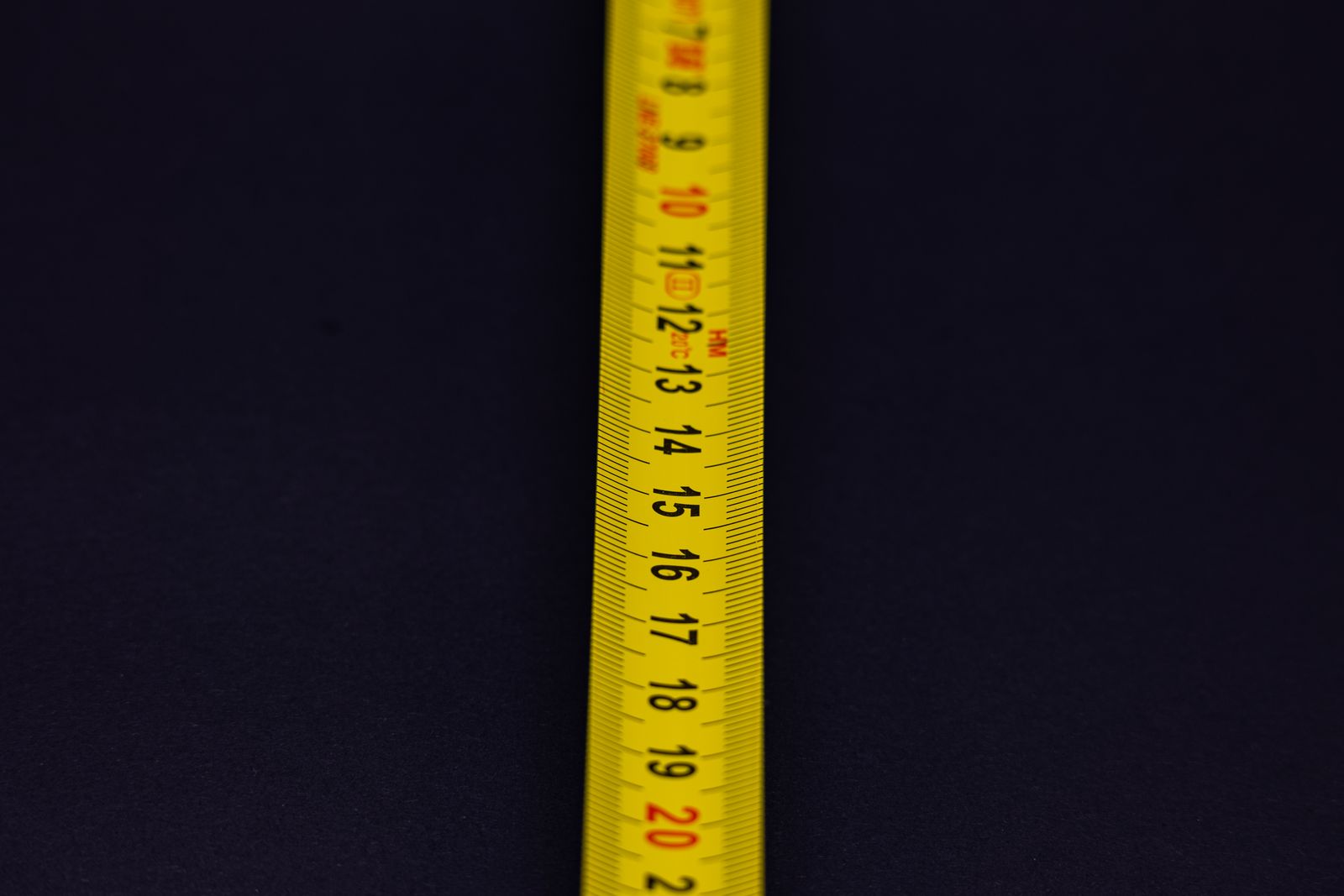
Mistakes in this conversion look small on paper, but they cost real money in the shop. The first mistake is using 2.54 instead of 25.4, which gives centimeters, not millimeters. That single decimal slip makes every answer ten times too small, and the part will not fit. The second mistake is mixing up inches and centimeters on a tape measure. Many dual scale tapes invite this slip. The third mistake is rounding too early, before the final multiplication, which shifts the result.
The fourth mistake is dropping the unit from the answer, so mm gets read as inches later. The fifth mistake is trusting a random online tool without a check, even when the tool looks clean. NASA lost the Mars Climate Orbiter in 1999, worth about 125 million dollars. The loss followed a unit mix up between teams. Your project is smaller, but the lesson is the same. Check the unit, check the factor and check the reverse.
Answer Box 2: For quick work, remember 1 inch equals 25.4 mm, 1 foot equals 304.8 mm, and 1 yard equals 914.4 mm. Use whole millimeters for rough cuts, one decimal for furniture, and two decimals for tight machine fits. Always divide by 25.4 at the end to check your answer.
Frequently Asked Questions About Converting Inches to Mm
Q: How many mm are in 1 inch?
A: There are exactly 25.4 millimeters in 1 inch, by the international definition agreed in 1959. This value is exact, not an approximation, so you can use it for precise work. It applies in every country that uses either system for length.
Q: What is the formula to convert inches to mm?
A: The formula is millimeters equals inches times 25.4, written as mm = in x 25.4. Multiply any inch value by 25.4, and the result is the length in millimeters. Use the same formula for whole numbers, decimals and fractions turned into decimals.
Q: How do I convert 5 inches to mm?
A: Multiply 5 by 25.4, which gives 127 millimeters exactly, with no rounding needed. This is a useful check value, because it is easy to remember and easy to test. If your tool gives a different answer for 5 inches, the tool is wrong.
Q: How do I convert 1/2 inch to mm?
A: One half inch equals 12.7 millimeters, because 0.5 times 25.4 equals 12.7. This value shows up often in sewing, piping and board thickness. Keep one decimal place here, so the result stays clear and easy to read.
Q: How do I convert 3/4 inch to mm?
A: Three quarters of an inch equals 19.05 millimeters, because 0.75 times 25.4 equals 19.05. Always turn the fraction into a decimal first, and then multiply by 25.4. Guessing the decimal is the most common cause of a wrong answer.
More Answers About Converting Inches to Mm
Q: How many mm are in 12 inches?
A: Twelve inches equal 304.8 millimeters, because 12 times 25.4 equals 304.8. Twelve inches also make one foot, so this is the same as one foot in millimeters. This value is useful for rulers, shelves and screen diagonals.
Q: Is 25 mm the same as 1 inch?
A: No, 25 millimeters is close to 1 inch, but it is short by 0.4 millimeters. That gap matters for tight fits, even though it looks tiny on a ruler. Always use 25.4 millimeters for 1 inch when the fit must be exact.
Q: How do I convert mm to inches?
A: Divide millimeters by 25.4 to get inches, which is the reverse of the forward formula. For example, 254 millimeters divided by 25.4 gives exactly 10 inches. Round the result to two decimals for most practical work.
Q: Should I round inches to mm answers?
A: Round only at the final step, and match the rounding to your project type. Use whole millimeters for rough work, one decimal for furniture and two decimals for tight fits. Early rounding adds error, so keep full values until the end.
Units, Tools and Common Errors
Q: Why do the US and most other countries use different units?
A: The United States kept the inch based system for daily life, while most countries moved to metric units. Trade, travel and online shopping now mix both systems on the same product page. One shared formula bridges the gap without changing either system.
Q: What tools convert inches to mm most reliably?
A: A phone calculator with the 25.4 factor is reliable. The calculator in this article uses the same factor. Digital calipers that switch units are also reliable when you check the unit on screen. Avoid tools that do not show the factor they use.
Q: What is the most common inches to mm error?
A: The most common error is using 2.54 instead of 25.4, which gives centimeters rather than millimeters. The second most common error is rounding a fraction before the multiplication step. Both errors are easy to catch with a reverse check.
Final Word
Converting inches to mm takes one formula, one careful check and a little care with fractions. Multiply by 25.4, keep decimals until the end, and divide back to check your work. That habit will save you from wrong cuts, wrong orders and wasted material. Use the table for common sizes, and use the calculator above for odd sizes. With those tools, no mixed unit label needs to slow you down again.
Learn more about the unit itself on Wikipedia: Inch