
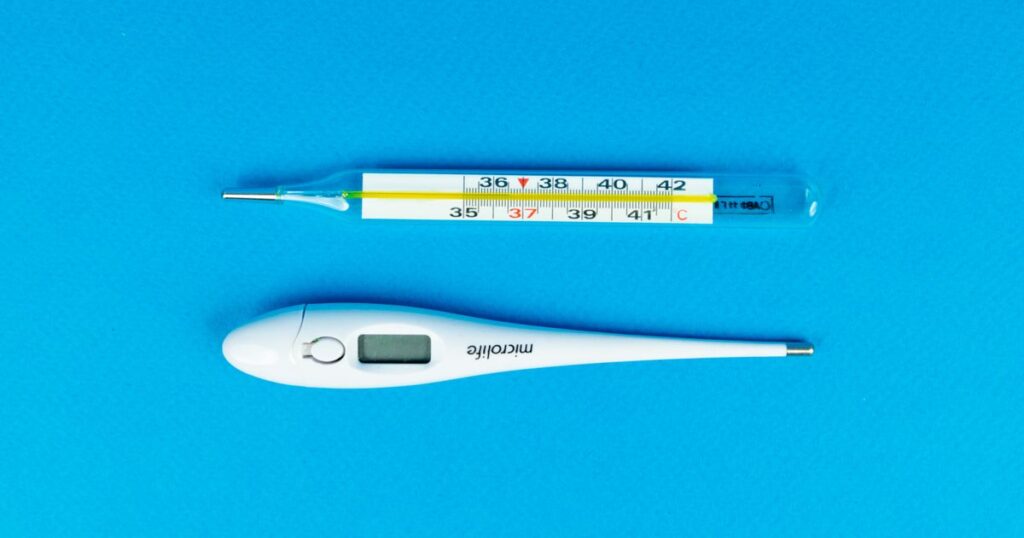
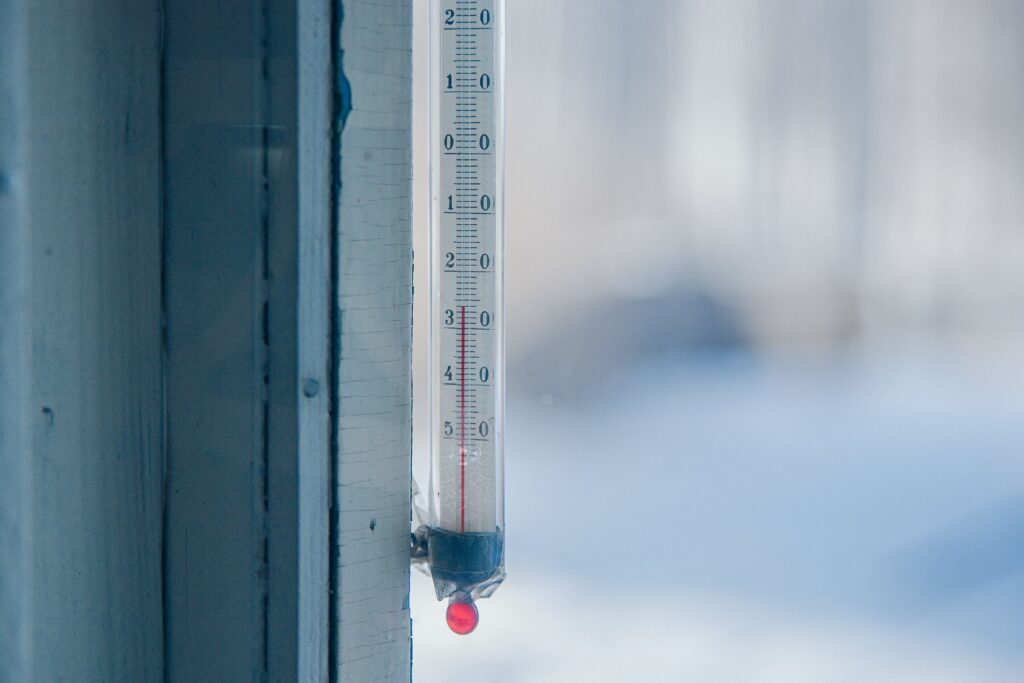
To convert Celsius to Fahrenheit, multiply the Celsius temperature by 1.8 and then add 32. The full formula is °F = (°C × 9/5) + 32. For example, 25 °C becomes 77 °F because 25 × 1.8 = 45, and 45 + 32 = 77. This one formula handles every Celsius to Fahrenheit conversion you will ever need, from weather forecasts to oven settings and science homework. That same Celsius to Fahrenheit method works for weather, cooking, and science alike.
Table of Contents
- Quick Answer
- Reverse Direction
- What Celsius and Fahrenheit Actually Measure
- The Celsius to Fahrenheit Formula, Explained in Plain Words
- 5 Best Easy Steps to Convert Celsius to Fahrenheit
- Worked Examples You Can Follow
- Celsius to Fahrenheit Conversion Chart
- The Mental Math Trick That Is Actually Exact
- Temperature Differences: The Gap Competitors Forget
- Where You Actually Use Celsius to Fahrenheit
- 7 Common Celsius to Fahrenheit Mistakes to Avoid
- Frequently Asked Questions About Celsius to Fahrenheit
- Final Word on Celsius to Fahrenheit
Quick Answer: The Formula in One Line
Celsius to Fahrenheit is a two-step calculation. First, multiply your Celsius value by 1.8. Second, add 32 to the result. So 20 °C × 1.8 = 36, and 36 + 32 = 68 °F. Remember the order: multiply first, then add. If you add 32 before you multiply, your answer will be wrong every single time. That order is the whole secret of a reliable Celsius to Fahrenheit calculation.
Reverse Direction: Fahrenheit to Celsius
If you need to go the other way, the process is the exact reverse. First, subtract 32 from your Fahrenheit value. Second, divide the result by 1.8. So 68 °F minus 32 is 36, and 36 divided by 1.8 is 20 °C. Remember that the subtraction happens before the division, just as the multiplication happened before the addition in the forward direction.
Celsius to Fahrenheit Calculator
25 °C = 77 °F
77 °F = 25 °C
What Celsius and Fahrenheit Actually Measure
Both scales measure the same thing, which is how hot or cold something is. They simply start at different points and use different-sized degrees. That shared job is why a Celsius to Fahrenheit conversion is possible at all: both scales describe the same heat, just with different numbers.
The Celsius scale was introduced by Swedish astronomer Anders Celsius. It sets the freezing point of water at 0 °C and the boiling point of water at 100 °C, both at standard atmospheric pressure. That makes the scale easy to remember, because its two most important points are 0 and 100.
The Fahrenheit scale was introduced earlier by Daniel Gabriel Fahrenheit. It sets the freezing point of water at 32 °F and the boiling point at 212 °F. That is why the Fahrenheit scale has an offset of 32 and a larger range between freezing and boiling.
The gap between freezing and boiling is 100 degrees on the Celsius scale. The same gap is 180 degrees on the Fahrenheit scale. Because 180 divided by 100 is 1.8, each Celsius degree equals 1.8 Fahrenheit degrees. That 100-to-180 relationship is the reason every Celsius to Fahrenheit formula uses 9/5, or 1.8.
The Celsius to Fahrenheit Formula, Explained in Plain Words
The formula for Celsius to Fahrenheit is °F = (°C × 9/5) + 32. The fraction 9/5 is exactly the same as 1.8, so you can use whichever version is easier for you. The 9/5 part stretches the Celsius value to match the larger Fahrenheit range, and the +32 part shifts it to start at the Fahrenheit freezing point.
Here is the formula in words, with no symbols at all. Take your Celsius number. Multiply it by 1.8. Add 32. That is your Fahrenheit answer. If you can remember multiply, then add, you can do this conversion anywhere, even without a calculator.
The reverse formula is °C = (°F − 32) × 5/9. Here you subtract 32 first, and then you multiply by 5/9, which is the same as dividing by 1.8. Notice that the reverse steps happen in reverse order, which is a useful way to check that you have not mixed up the two directions.
5 Best Easy Steps to Convert Celsius to Fahrenheit
Step 1: Write Down the Celsius Value
Start by writing the Celsius number clearly, including its minus sign if it is negative. A missing minus sign is one of the easiest mistakes to make, and it changes your answer by a large amount. If the temperature is below freezing, keep the minus sign in front of the number all the way through the calculation.
Step 2: Multiply by 1.8
Multiply your Celsius value by 1.8. You can also multiply by 9 and then divide by 5, which gives the same result. For 25 °C, the multiplication is 25 × 1.8 = 45. This multiplication step is the heart of a Celsius to Fahrenheit conversion, so double-check it before moving on.
Step 3: Add 32
Add 32 to the number you got in step 2. This step shifts your answer onto the Fahrenheit scale, where water freezes at 32 instead of 0. For 25 °C, the addition is 45 + 32 = 77, so 25 °C = 77 °F. Without this step, a Celsius to Fahrenheit result will always be 32 degrees too low.
Step 4: Check Against a Known Temperature
Compare your result with a temperature you already know. Water freezes at 0 °C, which is 32 °F. Room temperature is around 20 °C, which is 68 °F. Body temperature is 37 °C, which is 98.6 °F. If your answer is far from these known points, check your multiplication and your addition again. A quick check like this catches most Celsius to Fahrenheit slips before they reach your homework or recipe.
Step 5: Round and Label Your Answer
Round your answer to a sensible number of digits, and always write °F after it. Weather answers rarely need more than a whole number, while science answers may need one decimal place. A number without a unit is not a complete answer, because the reader cannot tell whether it is Celsius or Fahrenheit.
Worked Examples You Can Follow
Example one: convert 25 °C to Fahrenheit. Multiply 25 by 1.8 to get 45. Add 32 to get 77. So 25 °C = 77 °F. This is a warm, pleasant day.
Example two: convert 20 °C to Fahrenheit. Multiply 20 by 1.8 to get 36. Add 32 to get 68. So 20 °C = 68 °F. This is a comfortable room temperature.
Example three: convert 37 °C to Fahrenheit. Multiply 37 by 1.8 to get 66.6. Add 32 to get 98.6. So 37 °C = 98.6 °F. This is normal body temperature.
Example four: convert −10 °C to Fahrenheit. Multiply −10 by 1.8 to get −18. Add 32 to get 14. So −10 °C = 14 °F. This is a cold winter day.
Example five: convert 100 °C to Fahrenheit. Multiply 100 by 1.8 to get 180. Add 32 to get 212. So 100 °C = 212 °F. This is the boiling point of water.
Celsius to Fahrenheit Conversion Chart
| Celsius (°C) | Fahrenheit (°F) | What it feels like |
|---|---|---|
| −20 °C | −4 °F | Severe cold |
| −10 °C | 14 °F | Cold winter day |
| 0 °C | 32 °F | Freezing point of water |
| 10 °C | 50 °F | Cool day |
| 15 °C | 59 °F | Mild day |
| 20 °C | 68 °F | Room temperature |
| 25 °C | 77 °F | Warm, pleasant day |
| 30 °C | 86 °F | Hot day |
| 35 °C | 95 °F | Very hot day |
| 37 °C | 98.6 °F | Body temperature |
| 40 °C | 104 °F | Heatwave |
| 100 °C | 212 °F | Boiling point of water |
Use this chart for a fast lookup, and use the formula when you need an exact value that is not listed. The chart covers the temperatures you will meet most often, from cold winter days to hot oven settings. Keep this Celsius to Fahrenheit chart nearby when you are traveling or cooking, and use the formula for values in between.
The Mental Math Trick That Is Actually Exact
Most mental tricks for temperature conversion are rough estimates, but this one is exact. To convert Celsius to Fahrenheit in your head, double the Celsius value, subtract 10% of the doubled value, and then add 32. The double-minus-10% step is the same as multiplying by 1.8, because 2 minus 0.2 is 1.8. Because it is exact, this Celsius to Fahrenheit shortcut is safe for homework, not just for rough guesses.
Try it with 25 °C. Double it to get 50. Subtract 5 to get 45. Add 32 to get 77 °F. That matches the formula result exactly, and it is easy to do without writing anything down.
For a rough estimate only, you can double the Celsius value and add 30. That gives 80 °F for 25 °C, which is 3 degrees too high. Use this rough version only when a close answer is good enough, such as checking a weather forecast.
Temperature Differences: The Gap Competitors Forget
Here is a section most conversion articles skip, and it causes real confusion. A temperature difference is not the same as a temperature reading. When you convert a reading, you use the full formula, including the +32. When you convert a difference, you use only the 1.8 multiplier, and you leave out the +32 entirely. A Celsius to Fahrenheit conversion for a difference uses only the 1.8 multiplier, never the +32.
Think of it this way: the gap between 20 °C and 30 °C is 10 Celsius degrees. In Fahrenheit, those same two temperatures are 68 °F and 86 °F, so the gap is 18 Fahrenheit degrees. That is 10 × 1.8, with no 32 added, because the 32 cancels out when you subtract one reading from another.
This rule also explains why a “10 degree rise” means different things in different countries. A forecast that says temperatures will rise by 10 °C is describing a rise of 18 °F, not 10 °F. If you add 32 to a difference, you will get an answer that is far too large, and that is a mistake even careful writers make.
Where You Actually Use Celsius to Fahrenheit
Travel is the most common reason people convert Celsius to Fahrenheit. A traveler from the United States visiting Europe will see weather forecasts in Celsius, and a traveler from Europe visiting the United States will see forecasts in Fahrenheit. Knowing the conversion helps you pack the right clothes and plan outdoor activities. A Celsius to Fahrenheit check before you pack can save you from bringing the wrong clothes for the weather.
Cooking is the second most common reason. Many recipes from outside the United States list oven temperatures in Celsius, while ovens in the United States show Fahrenheit. A recipe that calls for 180 °C needs an oven set to 356 °F, and a recipe that calls for 200 °C needs 392 °F. Getting this conversion wrong can burn food or leave it undercooked. That is why a Celsius to Fahrenheit conversion matters in the kitchen, where a wrong oven setting can ruin a dish.
Science classes, health articles, and weather apps round out the list. Science uses Celsius almost everywhere, while health articles in the United States often report body temperature in Fahrenheit. Weather apps that serve both audiences need to show both scales, which is why a clear conversion method matters for readers in every country.
7 Common Celsius to Fahrenheit Mistakes to Avoid
The first mistake is adding 32 before multiplying. This gives a wrong answer that looks plausible, which makes it dangerous. For 25 °C, adding 32 first gives 57, and 57 × 1.8 gives 102.6 °F, which is far too hot for a pleasant day. Always multiply first, then add. This is the most common Celsius to Fahrenheit error, and it is easy to make under time pressure.
The second mistake is forgetting to add 32 at all. This happens when you stop after the multiplication step, and it leaves your answer exactly 32 degrees too low. A result of 45 for 25 °C should always feel wrong, because 45 °F is a cold day, not a warm one.
The third mistake is using the wrong multiplier. Some people multiply by 9/5 in the wrong direction, or divide when they should multiply. Remember: Celsius to Fahrenheit multiplies by 1.8, and Fahrenheit to Celsius divides by 1.8.
The fourth mistake is dropping the minus sign for negative temperatures. A temperature of −10 °C is very different from 10 °C, and the minus sign must stay with the number through every step of the calculation.
The fifth mistake is mixing up the freezing points. Water freezes at 0 °C and 32 °F, not at 0 °F. If you start from 0 °F, your whole conversion will be shifted by 32 degrees.
The sixth mistake is adding 32 when converting a temperature difference. As explained above, a difference uses only the 1.8 multiplier. Adding 32 to a difference is one of the most common errors in weather reporting.
The seventh mistake is rounding too early. If you round the multiplication result before you add 32, a small error can grow into a wrong final answer. Keep at least one decimal place through the calculation, and round only at the end.
Frequently Asked Questions About Celsius to Fahrenheit
What is the formula to convert Celsius to Fahrenheit?
The formula is °F = (°C × 9/5) + 32. You can also use °F = (°C × 1.8) + 32, because 9/5 is exactly the same as 1.8.
How do I convert 25 °C to Fahrenheit?
Multiply 25 by 1.8 to get 45. Add 32 to get 77. So 25 °C = 77 °F.
How do I convert 20 °C to Fahrenheit?
Multiply 20 by 1.8 to get 36. Add 32 to get 68. So 20 °C = 68 °F.
What is 37 °C in Fahrenheit?
37 °C is 98.6 °F. Multiply 37 by 1.8 to get 66.6, and add 32 to get 98.6. This is normal body temperature.
Why do you add 32 in the Celsius to Fahrenheit formula?
You add 32 because the two scales start at different points. Water freezes at 0 °C, but it freezes at 32 °F. The +32 shifts your answer onto the Fahrenheit scale so that the freezing point matches.
What temperature is the same in Celsius and Fahrenheit?
−40 °C is the same as −40 °F. This is the only temperature where the two scales give the same number, and it is a useful check for your conversion method.
How do I convert Fahrenheit back to Celsius?
Subtract 32 from the Fahrenheit value, and then divide by 1.8. For 77 °F, subtract 32 to get 45, and divide 45 by 1.8 to get 25 °C.
What is the fastest way to estimate Celsius to Fahrenheit?
Double the Celsius value and add 30. For 25 °C, double it to get 50, and add 30 to get 80 °F. This is 3 degrees too high, so use it only for a rough estimate, not for homework or cooking.
What is 0 °C in Fahrenheit?
0 °C is 32 °F. Multiply 0 by 1.8 to get 0, and add 32 to get 32. This is the freezing point of water.
What is 100 °C in Fahrenheit?
100 °C is 212 °F. Multiply 100 by 1.8 to get 180, and add 32 to get 212. This is the boiling point of water.
Which countries use Celsius and which use Fahrenheit?
Almost every country uses Celsius for daily life, including Europe, Asia, Africa, and Australia. The United States is the main exception, and it uses Fahrenheit for weather, cooking, and daily life, although science in the United States also uses Celsius.
How do I convert Celsius to Fahrenheit for oven temperatures?
Use the same formula: multiply by 1.8 and add 32. For example, 180 °C × 1.8 = 324, and 324 + 32 = 356 °F. Most ovens in the United States round to the nearest 5 or 10 degrees, so 356 °F is usually set to 355 °F or 360 °F.
What is the difference between a 1 °C change and a 1 °F change?
A change of 1 °C is the same as a change of 1.8 °F. This is why Celsius degrees feel larger than Fahrenheit degrees, and why a small Celsius change can feel like a larger Fahrenheit change.
Final Word on Celsius to Fahrenheit
Celsius to Fahrenheit conversion is one skill, one formula, and five easy steps. Multiply by 1.8, add 32, check against a known point, and label your unit. Once you have done it a few times, the steps become automatic, and you will not need to look up the formula for common temperatures.
For more everyday conversions, see our guides on liters to gallons, gallons to liters, ounces to grams, kilometers to miles, and how to convert cm to inches.
The history and fixed points of the Fahrenheit scale are covered in detail on Wikipedia.