
How to Check Oil Level in Car Without Errors: 6 Smart Steps
Learning how to check oil level in car takes five minutes. You pull the dipstick, wipe it clean, and read the marks. The oil should sit between the low and full marks. A level below the low mark means you must top up. This guide shows six smart steps that work on most cars.
Oil keeps the engine parts moving without grinding. It coats the metal, cuts friction, and carries heat away. Low oil leaves parts dry, and dry parts wear fast. AAA has reported that about one in five cars has a low or dirty oil level. A five-minute check catches that problem early. It is the cheapest engine care you can do.
Many drivers skip this check for months. An AA survey found that 32 percent of drivers skip the oil check before a summer road trip. The survey was published by the AA in 2025. The gap is not skill, it is habit. This guide turns the check into a habit you keep.
You need no tools for the basic check. A clean rag or paper towel is enough. Your car manual shows the dipstick spot and the right oil grade. This guide starts with the oil itself, then walks the six steps. It ends with the errors to avoid and a simple routine.
[SNIPPET TARGET] To check oil level in car, park on flat ground and wait for the engine to cool. Pull the dipstick out, wipe it clean, push it back in, and pull it out again. Read the oil line against the low and full marks. Top up with the grade your manual lists if the line sits below the low mark.
ANSWER BOX 1
Park on flat ground and let the engine cool for a few minutes. Pull the dipstick out, wipe it clean with a rag, and push it fully back in. Pull it out again and read the oil line. The line should sit between the low and full marks.
ANSWER BOX 2
A low reading means you should top up with the oil grade your manual lists. Add a little at a time, then check the dipstick again. A level that keeps dropping means a leak or burning oil, so book a shop visit. Never overfill, because too much oil can harm the engine too.
KEY TAKEAWAYS
- Park on flat ground and let the engine cool before you read the dipstick.
- Wipe the dipstick clean first, then read the second pull for a true level.
- The oil line should sit between the low and full marks.
- Top up with the grade your manual lists, a little at a time.
- A level that keeps dropping means a leak, so book a shop visit.
Contents
- What does engine oil do in your car?
- How to check oil level in car in 6 smart steps
- How to read the dipstick: what the marks mean
- The oil color test most guides skip
- 6 errors to avoid when you check oil level
- How often should you check the oil level?
- FAQ
What Does Engine Oil Do in Your Car?
Engine oil is the blood of the engine, in plain terms. It coats pistons, bearings, and cams with a thin film. That film lets metal slide on metal without grinding. It also carries heat away from hot parts.
Oil also cleans as it moves through the engine. It picks up tiny dirt and soot and holds it in the filter. Old oil turns dark as it collects that dirt. Dark oil is normal after months of use. Black and gritty oil means the change is overdue.
Low oil is the real danger, not dark oil. A low level leaves the top of the engine dry at startup. Dry parts wear fast and can seize in the worst case. AAA has reported that about one in five cars has a low or dirty oil level. A monthly check stops that risk for five minutes of work.
How to Check Oil Level in Car in 6 Smart Steps
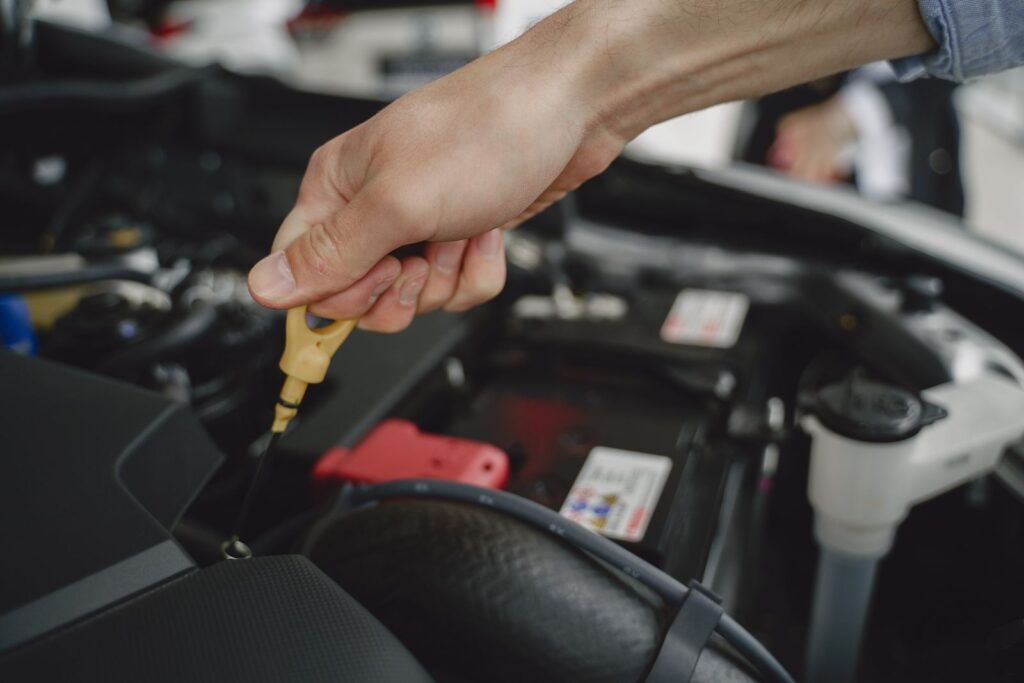
These six steps run in order, and they take five minutes. Work on flat ground with the engine off. Keep a clean rag in your hand from the start. Read the second pull, never the first. Each step below explains one move in plain words.
Step 1: Park Flat and Let the Engine Cool
Park on flat ground, because a slope tilts the oil. Set the parking brake and turn the engine off. Wait a few minutes so the oil drains back to the pan. A hot engine can burn your hand on the dipstick. Cool oil also gives a truer reading on the marks.
Step 2: Open the Hood and Find the Dipstick
Pull the hood release inside the car, then lift the hood. Find the dipstick by its bright handle, often yellow or orange. It sits beside the engine block in most cars. Your manual shows the spot if you cannot see it. Do not pull the transmission dipstick by mistake.
Step 3: Pull, Wipe, and Push Back In
Pull the dipstick out slowly and hold it over a rag. Wipe the whole blade clean with the rag. Push the dipstick fully back into its tube. A half-seated dipstick gives a false low reading. This wipe is the step most new drivers skip.
Step 4: Pull Again and Read the Marks
Pull the dipstick out a second time and hold it flat. Read the oil line against the marks on the blade. The marks may read Low and Full, or Min and Max. The line should sit between the two marks. A line at the low mark means you should top up soon.
Step 5: Top Up a Little at a Time
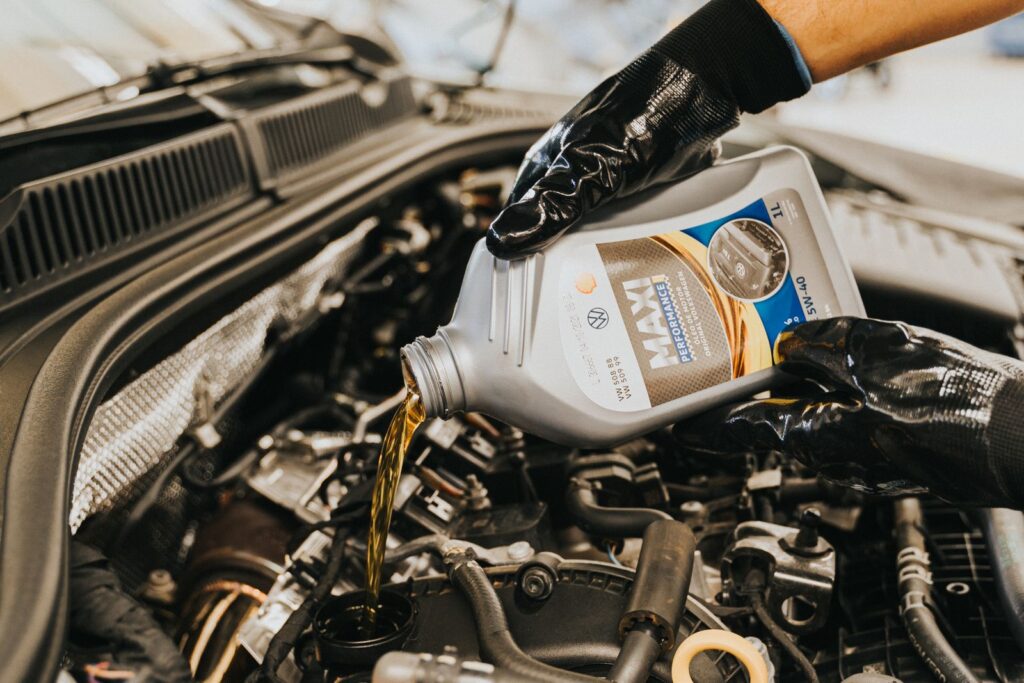
Unscrew the oil filler cap on top of the engine. Pour in a small amount of the grade your manual lists. Wait a minute, then check the dipstick again. Repeat until the line sits near the full mark. Never pour in a full bottle at once.
Step 6: Close Up and Note the Level
Push the dipstick fully back in and close the cap. Wipe any spill off the engine with the rag. Write the date and the level in your phone notes. A written record shows a slow leak over time. Close the hood and wash your hands.
How to Read the Dipstick: What the Marks Mean
The dipstick blade holds two marks and a story. The marks tell you the safe range for your engine. The oil on the blade tells you the color and the feel. The table below turns each reading into an action.
| Reading | What it means | What to do |
|---|---|---|
| Line between the marks | Oil level is safe | Drive on and check again next month |
| Line at the low mark | Oil is low but safe for now | Top up soon with the right grade |
| Line below the low mark | Oil is too low | Top up now, then check for a leak |
| Line above the full mark | Oil is overfilled | Do not drive far, ask a shop to drain some |
| No oil on the blade | Oil is very low or gone | Do not start the engine, call a shop |
The Oil Color Test Most Guides Skip
Most guides read the level and stop there. The oil color and feel tell you more than the level alone. This section adds a 30-second color test to the check. It needs no tools, only your eyes and your fingers. It can warn you weeks before a problem shows.
Rub a drop of oil between your thumb and finger. Clean oil feels smooth and looks amber or light brown. Dark brown oil is normal after months of use. Black, gritty oil means the change is overdue. Milky or creamy oil means water is mixing in, so book a shop visit fast.
Smell the dipstick too, because a burnt smell is a warning. Burnt oil smells sharp and acrid, like hot metal. A petrol smell can mean fuel is leaking into the oil. Either smell deserves a shop check, not a top-up. The color test turns a level check into a health check.
6 Errors to Avoid When You Check Oil Level
These six errors cause most wrong readings. Each one is easy to make, and each one is easy to fix. Read the list before your next check. A careful check gives a true level. A rushed check gives a false one.
- Reading the first pull without wiping. The first pull shows splashed oil, not the true level. Wipe first, then read the second pull.
- Checking on a slope or a hill. A slope tilts the oil to one side of the pan. Park on flat ground every time.
- Checking a hot engine right after a drive. Hot oil is thin and reads high on the blade. Wait a few minutes for the oil to settle.
- Topping up with the wrong grade. The wrong grade can harm the engine over time. Use only the grade your manual lists.
- Overfilling past the full mark. Too much oil can foam and starve the parts. Add a little, check, and stop near the full mark.
- Ignoring a level that keeps dropping. A steady drop means a leak or burning oil. Book a shop visit instead of topping up forever.
How Often Should You Check the Oil Level?
AAA recommends checking the oil level monthly, and that advice still holds. A monthly check takes five minutes and catches a slow leak early. Older cars need a check every two weeks, because they burn more oil. A car that just had a service still needs a check. Trust the dipstick, not the service sticker, for the level.
Pair the oil check with your brake check so both become one habit. See our guide on how to check brake pads: 7 easy checks to stop mistakes. Small home jobs build the same habit as car checks. See our guide on watch battery replacement: 8 powerful steps without mistakes.
Automakers typically recommend oil change intervals of 5,000 to 10,000 miles, says AAA. Your manual lists the exact interval for your car and your oil type. A short-trip car needs a change sooner than a highway car. Follow the manual, not the old 3,000-mile rule. A fresh change keeps the oil amber and the engine smooth.
How to Check Oil Level in Car FAQ
How often should I check my oil level?
AAA recommends a monthly check for most cars. Older cars that burn oil need a check every two weeks. Check sooner after a long trip or towing. A five-minute check beats an engine repair.
Should I check oil when the engine is hot or cold?
Check it when the engine is warm but off, after a few minutes of rest. Cold oil reads fine too, but it drains slowly. Hot oil right after a drive reads high and can burn you. Wait a few minutes, then read the second pull.
What does it mean if my oil is low?
A low level means the engine has used or lost oil. Top up with the grade your manual lists. A level that keeps dropping means a leak or burning oil. Book a shop visit if the drop keeps happening.
How much oil should I add?
Add a little at a time, about half a quart or less. Wait a minute, then check the dipstick again. Stop when the line sits near the full mark. Never pour in a full bottle at once.
What kind of oil does my car need?
Your manual lists the grade, like 5W-30 or 0W-20. Use that exact grade for a top-up. A shop can confirm the grade if you lost the manual. The wrong grade can harm the engine over time.
What color should engine oil be?
Fresh oil looks amber or light brown. Dark brown oil is normal after months of use. Black, gritty oil means the change is overdue. Milky oil means water is mixing in, so see a shop fast.
Can I drive with low oil?
A short drive to a shop is fine if the level is just low. A level below the low mark needs a top-up first. No oil on the blade means you should not start the engine. Call a shop or a tow truck instead.
Why is my oil level dropping fast?
A fast drop usually means a leak or burning oil. Look for dark spots under the car each morning. Blue smoke from the exhaust also points to burning oil. A shop can find the cause with a simple check.
What happens if I overfill the oil?
Too much oil can foam and fail to coat the parts. It can also raise pressure and push past seals. A small overfill is often fine, but a large one is not. Ask a shop to drain the extra oil.
Where is the dipstick in my car?
The dipstick sits beside the engine block with a bright handle. The handle is often yellow or orange. Your manual shows the exact spot for your model. Do not pull the transmission dipstick by mistake.
Do electric cars need an oil check?
No, a fully electric car has no engine oil to check. It still has coolant and washer fluid to watch. A hybrid car does have engine oil, so check it monthly. Your manual lists what your car needs.
How do I know when my car needs an oil change?
Follow the interval in your manual, often 5,000 to 10,000 miles. Dark, gritty oil and a burnt smell also point to a change. A dashboard oil light means you should book a service soon. Do not wait for a warning light to check the level.
Final Word
You now know how to check oil level in car in six smart steps. Park flat, wipe the dipstick, and read the second pull. Top up a little at a time with the right grade. A monthly check keeps the engine safe and smooth.
If you order motor oil online, track the parcel so you know when it lands. See our guide on USPS tracking number search: 5 proven ways to stop errors. Keep your service records with your other key papers. See our guide on Social Security phone number: 9 best tips to never miss. Your engine will thank you for the habit.
Read more about motor oil on Wikipedia: https://en.wikipedia.org/wiki/Motor_oil