
How to Clean a Fan: 5 Best Tricks That Never Spread Dust Again
Learning how to clean a fan the right way takes ten minutes. It keeps dust out of the air you breathe. Turn the fan off first, then trap the dust instead of brushing it into the room. A damp microfiber cloth or an old pillowcase catches dust on ceiling fan blades. A vacuum brush works best on box fans and tower fans. Dry the blades after wiping them, because damp blades attract new dust fast, and clean ceiling fans monthly.
The dust on your fan is more than ugly, and it can affect the air in your home. The EPA says indoor air can be two to five times more polluted than outdoor air. Americans spend about 90 percent of their time indoors. A dirty fan spreads dust, pollen, and pet dander each time it spins. A national survey found dust mite allergen in the beds of 84.2 percent of United States homes. Indoor allergens are common.
How to clean a fan: turn it off, trap dust with a damp microfiber cloth or pillowcase, wipe each blade from the center outward, vacuum the grille and motor vents, then dry every part. Clean ceiling fans monthly and box fans every season. Never use a dry duster on a running fan, because it throws dust into the air.
ANSWER BOX 1
The pillowcase trick is the best way to clean a ceiling fan without a mess. Slide an old pillowcase over one blade and pull it back slowly. The dust stays trapped inside. Shake the case into a bag when you finish.
ANSWER BOX 2
The safest way to clean any fan is to unplug it first. Switch it off at the wall before you touch it. Never clean a fan while it is running, and never spray water near the motor or the cord. Use a damp cloth and dry the blades after wiping.
KEY TAKEAWAYS
- Turn the fan off first, then trap the dust.
- A pillowcase or damp cloth catches dust on ceiling fan blades.
- A vacuum brush is best for grilles and tower vents.
- Dry every blade after wiping, because damp blades attract dust fast.
- Dust ceiling fans monthly and deep clean box fans every season.
Contents
- Why fans get dusty
- What you need
- 5 best tricks
- Ceiling fan steps
- Box fan and tower fan
- How often to clean
- 7 mistakes
- FAQ
Why Your Fan Gets Dusty So Fast
Your fan gets dusty fast because it pulls air and tiny particles toward its blades all day. The moving blades draw dust, pollen, and pet hair from the room, and some of it sticks. Static electricity also makes dust cling to the blade surface. A fan can look dirty only weeks after cleaning. Hunter Fan Company notes the same static effect on blades.
Fans have collected dust since the first ones appeared in American homes. The first electrically powered ceiling fan was built in 1882. German-American inventor Philip Diehl adapted a motor he had designed for Singer sewing machines. John and James Hunter built their first ceiling fan in 1886.
What You Need to Clean a Fan Safely
You need only a few cheap tools to clean a fan well. Most of them are already in your home. Start with microfiber cloths, an old pillowcase, and a vacuum with a brush attachment. Add warm water with a drop of mild dish soap. Add a step ladder, a spray bottle with half water and half vinegar, and a dry towel. Keep a trash bag nearby for dusty cloths.
Lay the sheet down before you touch the fan. Even a careful clean can drop some dust. Mop the floor after the job. Our guide on how to clean cork flooring shows how to care for soft floors. Never use harsh sprays or bleach on fan blades, because they can strip the finish.
| Tool | What it does | Best for |
|---|---|---|
| Pillowcase | Traps dust inside as you pull it off a blade | Ceiling fans |
| Microfiber cloth | Wipes dust without scratching the finish | All fans |
| Vacuum brush | Sucks dust from grilles, vents, and housing | Box and tower fans |
How to Clean a Fan: 5 Best Tricks That Never Spread Dust Again
These 5 tricks work on every kind of fan. Each one traps dust instead of throwing it into the air.
Trick 1: The Pillowcase Trick
The pillowcase trick is the best way to clean a ceiling fan without a mess. Slide a pillowcase over one blade and pull it back slowly. The dust stays trapped inside the case. Shake the case into a bag, then repeat the move on each blade.
Trick 2: The Damp Microfiber Wipe
A damp microfiber cloth beats a dry duster, because dry cloths push dust into the air. Wet the cloth, wring it out well, and wipe each blade from the center outward. Rinse the cloth often so you do not smear old dust onto the next blade. Microfiber grabs fine dust and will not scratch blades.
Trick 3: The Vacuum Brush First
Vacuum first when the fan is very dusty, because wiping thick dust smears it around. Fit the brush attachment and set it to low suction. Run it slowly over each blade and the grille. Work from the top of the fan down, and empty the vacuum right after you finish. A vacuum also reaches the tight slots on a tower fan.
Trick 4: The Vinegar Spray for Sticky Grime
Kitchen fans and old fans often carry sticky grime that plain water cannot lift. Mix half water and half white vinegar, spray the mix onto your cloth, and wipe the blade. Never spray the mix straight onto the fan, because liquid can drip into the motor. The vinegar cuts grease well.
Trick 5: The Dry and Dust-Proof Finish
The last trick is the one most people skip. Dry every blade with a clean towel right after wiping, because damp blades attract new dust fast. Consumer Reports warns that damp blades attract dust, so a dry finish is not a small detail. Rub a used dryer sheet over each blade to cut the static.
How to Clean a Ceiling Fan Step by Step
Ceiling fans need a ladder and a plan. The blades sit above your head, and the dust falls down. Lay an old sheet under the fan. Set the ladder so you can reach each blade, and switch the fan off at the wall. Use the pillowcase trick on each blade first, then wipe the blades with a damp microfiber cloth. Clean the motor housing too, and dry everything before you climb down.
- Switch the fan off at the wall and let the blades stop fully before you touch them.
- Lay a sheet under the fan and set the ladder within reach.
- Slide a pillowcase over each blade and pull it back slowly to trap the dust.
- Wipe each blade with a damp microfiber cloth, working from the center outward.
- Clean the motor housing, then dry every part.
- Remove the sheet, shake it outside, and run the fan on low.
Working at height needs care, so never stand on a chair or a bed to reach the fan. A firm step ladder with a wide base is the safe choice. Our guide on how to install a curtain rod shows how to work safely above head height. Check the blades are tight if the fan wobbles.
How to Clean a Box Fan and a Tower Fan
A box fan is easy to clean once you take the grille off. Most grilles pop off with clips or a few screws. Unplug the fan first. Remove the front grille, and vacuum the blades and the inside of the grille with a brush attachment. Wipe the blades with a damp cloth, and let it dry fully before you put it back. Never spray water into the motor.
A tower fan needs a different method, because it has no open blades to wipe. Unplug the tower fan, then vacuum the front and back vents with a brush attachment. Use a thin brush to clear dust from the narrow slots. Check your manual before you take any part off. Wipe the outside with a damp cloth and dry it well. Plug it back in only when every part is dry.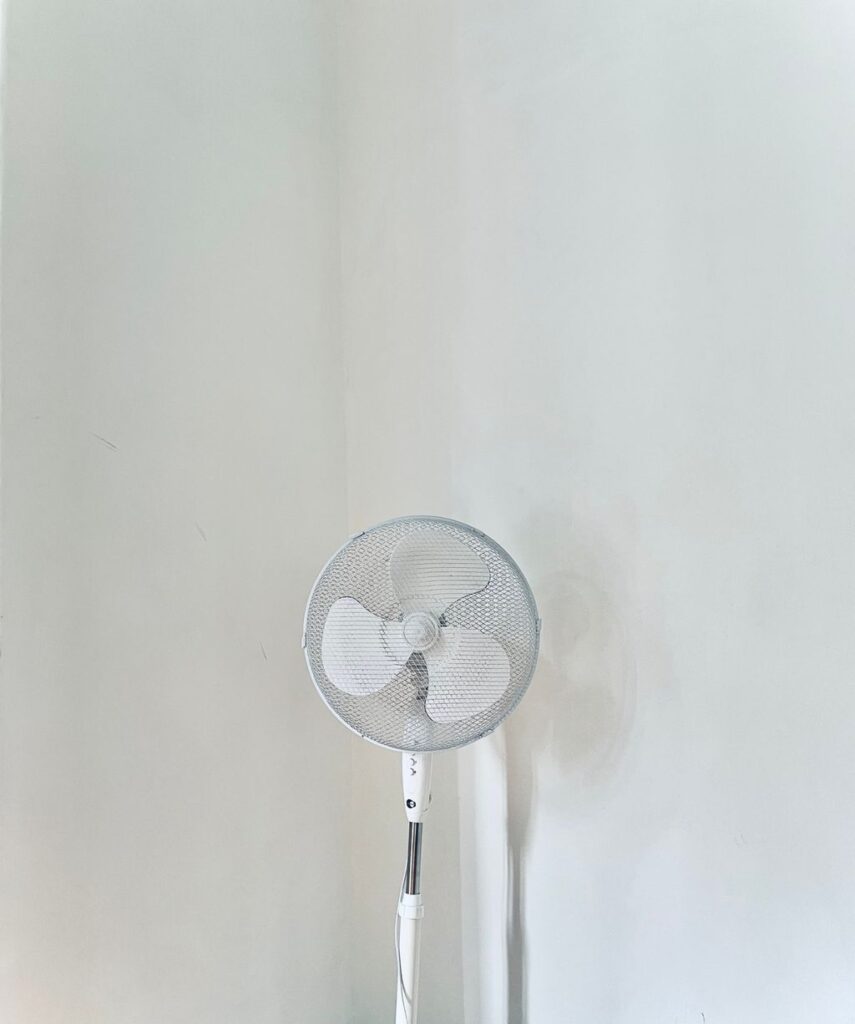
How Often Should You Clean a Fan?
How often you clean a fan depends on where it sits and how much you use it. Consumer Reports says to clean ceiling fans at least once a season. Hunter Fan Company says to dust a ceiling fan every one to three months. Homes with pets need more frequent cleaning.
| Fan type | Light dusting | Deep clean |
|---|---|---|
| Ceiling fan | Every 2 to 4 weeks | Every 2 to 3 months |
| Box fan | Every 2 weeks in summer | Every season |
| Tower fan | Every 2 to 4 weeks | Every 3 to 6 months |
Set a monthly reminder, and dusting takes only five minutes per fan. A quick monthly wipe stops dust from forming a thick layer. A thick layer is much harder to clean. Mop the floor after each clean. Our guide on how to clean cork flooring shows how to care for soft floors.
7 Mistakes That Spread Dust Everywhere
These 7 mistakes cause most of the dust clouds people hate, and each one is easy to avoid.
- Cleaning a fan while it is still running. A spinning fan throws dust across the room the moment you touch a blade. Always switch the fan off and wait for the blades to stop.
- Using a dry feather duster on dusty blades. A dry duster lifts dust into the air instead of catching it. Use a damp cloth or a pillowcase instead.
- Spraying cleaner straight onto the fan. Liquid can drip into the motor and harm it. Spray the cleaner onto your cloth, then wipe the blade.
- Skipping the grille and the motor vents. Dust hides in the grille and the vents, and the fan blows it back out when you switch it on. Vacuum the grille and vents with every clean.
- Leaving the blades damp after wiping. Damp blades attract new dust fast. Dry every blade with a clean towel right after you wipe it.
- Cleaning the fan and skipping the room. Dust on the floor stays in the room if you do not vacuum after. Vacuum or mop the floor under the fan when you finish.
- Waiting a full year between cleans. A year of dust forms a thick layer that is hard to remove. Dust ceiling fans monthly to keep the job easy.
How to Clean a Fan FAQ
How often should you clean a fan?
Clean a ceiling fan at least once a season, and dust it every two to four weeks. Box fans need a deep clean each season.
What is the best way to clean a ceiling fan without making a mess?
Slide an old pillowcase over each blade and pull it back slowly. The dust stays trapped inside the case.
Can you clean a fan while it is on?
No, never clean a fan while it is on. A spinning fan throws dust across the room, and the moving blades can hurt your hand.
How do you clean a really dusty fan?
Vacuum a really dusty fan first with a brush attachment. Then use the pillowcase trick or a damp microfiber cloth on each blade.
Can I use vinegar to clean a fan?
Yes, vinegar works well on sticky grime. Mix half water and half white vinegar, spray it onto your cloth, and wipe the blade.
How do you clean a box fan?
Unplug the box fan, remove the front grille, and vacuum the blades with a brush attachment. Wipe the blades and let the grille dry fully.
How do you clean a tower fan?
Unplug the tower fan and vacuum the front and back vents with a brush attachment. Use a thin brush to clear dust from the narrow slots.
Why does my fan get dusty so fast?
Your fan pulls air and tiny particles toward its blades all day. Static electricity also makes dust cling to the blade surface.
Does a dirty fan make allergies worse?
Yes, a dirty fan can make allergies worse. It spreads dust, pollen, and pet dander into the air. Monthly cleaning cuts the dust it moves around.
Can I wash fan blades with water?
You can wipe fan blades with a damp cloth, but you should not soak them in water. Too much water can warp wood blades and harm the motor.
How do you clean a fan without a ladder?
Use a long-handled duster or an extendable microfiber duster to reach a ceiling fan from the floor. For a deep clean, use a ladder and the pillowcase trick.
Should I clean the fan motor too?
Yes, clean the outside of the fan motor, because dust in the vents can make it run hot. Vacuum the vents gently and wipe the housing with a damp cloth.
Final Word
Learning how to clean a fan the right way takes ten minutes. It pays off every day the fan runs. Trap the dust with a pillowcase or a damp cloth. Vacuum the grille and vents, and dry every blade so new dust has nothing to stick to. Clean ceiling fans monthly and deep clean box fans each season. Never clean a fan while it is running.
Dust and dirt can leave stains behind. Our guide on how to remove blood stains gives proven methods that work on fabric. A clean fan is a small job with a big payoff. Now you have the 5 best tricks to do it without spreading dust again. If you want one more home fix, our guide on how to fix loose glasses shows another repair. You can finish it in ten minutes.
Read more about fans on Wikipedia: https://en.wikipedia.org/wiki/Ceiling_fan