
How to Install a Curtain Rod Without Mistakes: 6 Simple Steps for a Straight Hang
You can install a curtain rod in about 30 minutes with a drill and a level. Mark the bracket spots 4 to 6 inches above the window frame. Drill pilot holes, fix the brackets in place, and rest the rod on top. Check the rod with a level, then hang your curtains. Add a center bracket for any rod longer than 60 inches. This guide shows each step in plain order, plus the mistakes that cause crooked rods. This guide explains how to install curtain rod brackets level, straight and secure, with no guesswork.
Curtain rods are older than most people think. Samuel R. Scottron, an African American inventor, patented an adjustable curtain rod in 1892. His United States patent, number 481,720, was granted on August 30, 1892. Charles W. Kirsch followed with a flat expandable rod around 1907. He later added the traverse rod in 1928, which moves drapes with a cord. These early designs set the shape of rods we still buy today.
Most rods fail from bad placement, not bad hardware. A rod hung too low makes the window look short. A rod that is too narrow traps curtains over the glass. Taskrabbit and other installers agree on one fix. Mount the rod 4 to 6 inches above the frame. Extend it 8 to 12 inches past each side. That extra height lifts the eye, and the width lets panels stack clear.
To install a curtain rod, mount the brackets 4 to 6 inches above the frame. Extend the rod 8 to 12 inches past each side of the window. Drill pilot holes, fix the brackets, and set the rod in place. Check the level, hang the curtains, and test the slide. Add a center bracket for any rod longer than 60 inches. Once you know how to install curtain rod brackets at this height, the rest of the job is straightforward.
ANSWER BOX 1
You need a tape measure, pencil, level, drill, screws, wall anchors, and a stool. Most jobs take 20 to 30 minutes, and a second pair of hands helps with wide rods. Mark both bracket spots before you drill, and check the marks with a level. A little prep saves you from patched holes and a crooked rod.
ANSWER BOX 2
If you rent your home, use a tension rod or adhesive hooks, and skip the drill. Tension rods press between the sides of a window frame, and they suit light curtains. Adhesive hooks stick to smooth walls, but check the weight limit on the pack first. Both options leave no holes, and you can remove them in minutes.
KEY TAKEAWAYS
- Mount the rod 4 to 6 inches above the window frame for a taller look.
- Extend the rod 8 to 12 inches past each side, so curtains clear the glass.
- Add a center bracket for any rod longer than 60 inches.
- Drill into studs where you can, and use wall anchors in plain drywall.
- Check the rod with a level before you hang the curtains.
Contents
- What you need to install a curtain rod
- How to measure for a curtain rod
- How to install a curtain rod in 6 simple steps
- How to install a curtain rod without drilling
- How to fix a curtain rod that keeps falling down
- How to keep a curtain rod straight and level
- 6 mistakes to avoid when you install a curtain rod
- Curtain rod types compared
- FAQ
What You Need to Install a Curtain Rod
Gather your tools before you start, because stopping mid-job leads to rushed marks. You need a tape measure, pencil, level, drill, screws, wall anchors, and a stool. Most rod kits include screws and anchors, but check the box first. Cheap kits often skip the anchors, so buy a small pack if needed. A stud finder helps too, and it costs little, so keep one handy. Keep the curtains and rings close by, so you can test the fit.
Pick a rod that fits the weight of your curtains. Light sheers work fine on a slim 5/8 inch rod. Lined drapes need a 1 inch rod or thicker. Buy a rod that spans the window plus 16 to 24 inches. Wipe dust from the frame before you mark it, so pencil lines stay clear. If dust builds up fast in your home, try our guide on how to clean a fan.
How to Measure for a Curtain Rod
Good measuring takes five minutes, and it decides how the window looks. Measure the frame width first, then add 8 to 12 inches on each side. That width gives curtains a place to stack when open. Next, mark the rod height 4 to 6 inches above the frame. This lift makes the window look taller, and rings move with ease.
Mark both bracket spots with a pencil, then join them with a level line. Wall studs in most homes sit 16 or 24 inches apart. A stud finder shows where the solid wood sits. Drive screws straight into a stud for the best hold. On plain drywall, use a wall anchor, and never trust a bare screw. Write the rod length and bracket spots on paper, so you can recheck them.
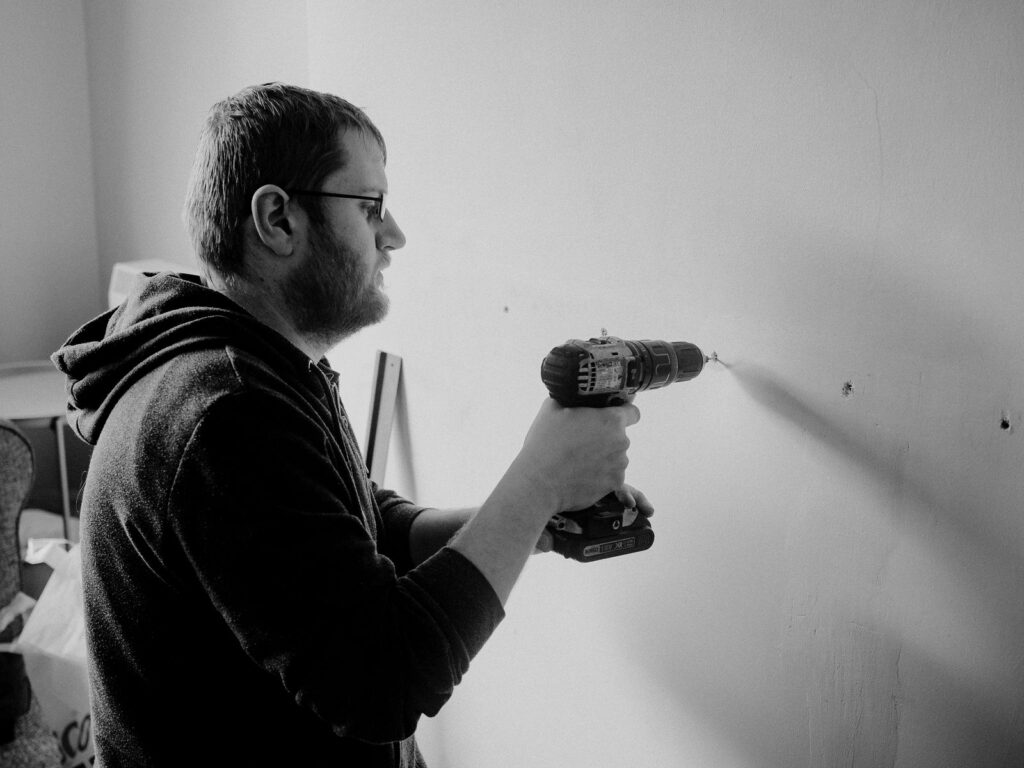
How to Install a Curtain Rod in 6 Simple Steps
These six steps work for most standard windows. They take about half an hour from start to finish. Read all six steps first, then start at step one. Work slowly at the marking stage, since a wrong mark costs more time. Follow them in order if you want to learn how to install curtain rod fittings without extra holes or a crooked finish.
- Measure and mark the bracket spots. Hold the tape at the top of the frame. Measure up 4 to 6 inches, and mark the spot.
- Check for studs and pick your fixings. Run a stud finder over each mark, and note which marks sit over wood.
- Drill pilot holes at each mark. Pick a bit slightly smaller than your screws, and drill straight into the wall.
- Fix the brackets to the wall. Hold each bracket over its holes, drive the screws in snug, and stop when it sits flat.
- Set the rod in place and check the level. Rest the rod on the brackets, place a level on top, and adjust if needed.
- Hang the curtains and test the slide. Thread the rings onto the rod, hang the panels, and slide them open and shut.
How to Install a Curtain Rod Without Drilling
Renters need a rod with no holes, and three options work well. Tension rods press between the sides of a window frame. They fit with no tools, and they suit light curtains. Adhesive hooks stick to smooth walls and hold a light rod. Magnetic rods grip metal doors and hold light panels with ease.
No-drill rods have clear limits, so match the rod to the fabric. Heavy blackout panels will pull a tension rod down. Damp walls can loosen adhesive hooks in a week. Hang one panel first, and leave it for a day. If the rod slips, switch to a lighter fabric or a stronger hook.
How to Fix a Curtain Rod That Keeps Falling Down
A falling rod often has one of three faults. The first fault is a loose anchor in plain drywall. The screw spins with no grip, so the bracket pulls free. The second fault is a rod too long for its brackets. The middle sags, and the ends pull free over time. The third fault is a bracket on weak wall, such as old plaster.
Find the fault first, then fix it. A new rod on the same weak spot will fall again. Swap a loose anchor for a toggle bolt, which spreads the load. Toggle bolts hold 50 pounds or more per anchor. If the rod sags, add a center bracket at the halfway point. If the wall patch is weak, move the bracket to fresh wall.
How to Keep a Curtain Rod Straight and Level
A straight rod starts with level brackets and the right supports. Check the level twice: after you mark, and after you fix the brackets. If the bubble sits off center, loosen the screws and shift the bracket. Small shifts at the bracket change the far end a lot.
Long rods need more than two brackets. Add a center bracket for any rod longer than 60 inches. Keep each span between supports at 30 to 36 inches. For rods over 96 inches, use four brackets in near-equal spans. Keep each bracket 4 to 6 inches in from the rod ends.
6 Mistakes to Avoid When You Install a Curtain Rod
These six mistakes cause most failed installs. Read them before you pick up the drill. A little care now saves patched holes and bent rods. Most faults show up days later, when a bracket pulls free. Avoiding them is the fastest way to learn how to install curtain rod hardware correctly the first time.
- Hanging the rod too low. A rod at the top of the frame makes the window look short. Lift it 4 to 6 inches, and the room gains height.
- Making the rod too narrow. A rod that ends at the frame traps curtains over the glass. Add 8 to 12 inches on each side, so panels stack clear.
- Skipping the level check. A rod can tilt by half an inch, and curtains will slide to one side. Check the level at the marks and again after the brackets are fixed.
- Trusting a bare screw in drywall. A bare screw can hold for a day, then pull free under weight. Use a wall anchor or toggle bolt for each bracket that misses a stud.
- Forgetting the center bracket. A long rod with two brackets will sag, and the rings will stick. Add a center support for spans over 60 inches.
- Over-tightening the screws. A screw driven too hard can crack the bracket or strip the anchor. Tighten until the bracket sits snug and firm, then stop.
Curtain Rod Types Compared
Pick the rod type that fits your window and your fabric. The table sums up five common types and the job each suits. Match the type to the curtain weight first, and let style follow. A pretty rod that cannot hold your drapes is a poor buy.
| Rod type | Best for | Needs drilling | Notes |
|---|---|---|---|
| Decorative rod | Most windows and medium drapes | Yes | Visible pole with finials at each end |
| Tension rod | Rentals, cafe curtains, light panels | No | Presses inside the window frame |
| Traverse rod | Heavy drapes that open with a cord | Yes | Track with carriers that glide smooth |
| Double rod | Layered sheers over blackout panels | Yes | Two poles on one set of brackets |
| Cafe rod | Short panels on half windows | No or yes | Slim rod for kitchens and small panes |
Decorative rods suit most homes, and they come in many styles. Tension rods suit renters best, since they leave no holes. Traverse rods suit wide windows, since a cord moves heavy drapes. Double rods suit bedrooms that need sheer light and full blackout. Cafe rods suit kitchens, where only the lower half needs cover.
How to Install a Curtain Rod FAQ
How high should I install a curtain rod above a window?
Mount the rod 4 to 6 inches above the top of the frame. For ceilings of 9 feet or more, go 8 to 12 inches above the frame.
How far past the window should a curtain rod extend?
Extend the rod 8 to 12 inches past the frame on each side. That width lets open panels stack clear of the glass.
How many brackets does a curtain rod need?
Use two brackets for rods up to 48 inches. Any rod over 60 inches needs a center bracket, with spans of 30 to 36 inches.
Can I install a curtain rod without drilling?
Yes, use a tension rod inside the frame or adhesive hooks on a wall. Both suit light curtains, and both leave no holes behind.
How do I install a curtain rod on drywall with no stud?
Drill a pilot hole, fit a wall anchor, and drive in the screw. For heavy drapes, use a toggle bolt, which spreads the load.
What tools do I need to install a curtain rod?
You need a tape measure, pencil, level, drill, screws, and wall anchors. A stud finder helps, and most jobs take 20 to 30 minutes.
How do I keep a curtain rod level?
Join both bracket marks with a level line before you drill. Check the level again after the brackets are fixed.
Why does my curtain rod keep falling down?
The cause is often a loose anchor, or a long rod with no center bracket. Swap weak anchors for toggle bolts, and add a center support.
What size curtain rod do I need?
Measure the frame, then add 16 to 24 inches in total. Check the weight rating, since lined drapes need a thicker rod.
Can I install a curtain rod on the ceiling?
Yes, use ceiling-mount brackets fixed to the joists above the window. This suits rooms with little wall space over the frame.
How long does it take to install a curtain rod?
Most single windows take 20 to 30 minutes, once tools are ready. Wide windows with a center bracket can take 40 minutes.
Should the curtain rod match the curtain rings?
Match the finish where the rod shows, such as nickel with nickel rings. If rings stick, check the rod diameter, since a thick rod can jam them.
Small home jobs share one habit: measure first, then fix the fault at its root. If your glasses slip, our guide on how to fix loose glasses shows a quick fix. If a mark lands on fabric, our guide on how to remove blood stains can help. If your floors need care too, our guide on how to clean cork flooring covers a soft floor.
Final Word
Learning how to install a curtain rod is a small job with a big payoff. Measure twice, mark with care, and check the level before you drill. Add a center bracket for long rods, and pick fixings that suit your wall. Once the rod sits level and the curtains slide with ease, step back and enjoy the change. A neat window makes the room feel finished.
Read more about curtain rods on Wikipedia: https://en.wikipedia.org/wiki/Curtain_rod