
How to Convert Inches to Feet
If you need to know how to convert inches to feet, divide the inch number by 12. That is the whole rule, since one foot holds exactly 12 inches. For example, 36 inches divided by 12 equals 3 feet, and 24 inches divided by 12 equals 2 feet. When the answer is not a whole number, the decimal part can turn back into inches, so 20 inches becomes 1 foot 8 inches. This guide gives you a free calculator, a clear table, and five easy steps that prevent the rounding errors most people make. You will also learn how to read the result as decimal feet, as feet plus inches, and as a tape measure reading.
Answer Box 1: To convert inches to feet, divide inches by 12, because 1 foot equals 12 inches. So 36 inches is 3 feet, 60 inches is 5 feet, and 20 inches is 1.67 feet, or 1 foot 8 inches. Use the calculator below for any value, then round only at the last step.
Inches to Feet Calculator
Enter inches, and get decimal feet plus feet and inches at once.
36 inches = 3.00 feet = 3 ft 0 in
Reverse check: enter feet in the box below, then tap Reverse.
Formula: feet = inches divided by 12. Reverse: inches = feet times 12.
Answer Box 2: The most common error is rounding too early, which shifts a cut or a room size by a real amount. Keep full decimals while you work, then round the final answer to two decimals or to the nearest inch. Always write the unit with the answer, since a bare number like 5 could mean 5 feet or 5 inches.
The Formula, in Plain Words
The formula is feet equals inches divided by 12. You can also write it as inches times 0.08333, since one inch is one twelfth of a foot. Both forms give the same answer, but division by 12 is easier to check by hand. For example, 48 divided by 12 equals 4, so 48 inches is 4 feet. For 20 inches, 20 divided by 12 equals 1.6667, so the decimal answer is 1.67 feet when rounded to two decimals. That decimal still hides a useful fact, since 0.6667 of a foot times 12 equals 8 inches. So the mixed form is 1 foot 8 inches, and that form is often more useful for a tape measure. The relation is exact, not an estimate, since the foot is defined as 12 inches in the US customary system. The National Institute of Standards and Technology (NIST) states that the international foot equals exactly 0.3048 metre, and the international inch equals exactly 0.0254 metre. Those exact values mean that any wobble in your answer comes from rounding, not from a fuzzy factor. Keep that point in mind, since it explains why the steps below stress late rounding.
The foot has a long history, and it was standardised in its modern form in 1959, when the international foot was set at 0.3048 metre. Before that date, local feet could differ by tiny amounts, which caused real trouble for maps and building work. Today, the US customary foot and the imperial foot share the same exact value, so a conversion done in the United States matches one done in the United Kingdom. One yard holds 3 feet, or 36 inches, and that fact gives a fast check for large values. If a result looks far too large or far too small, check whether you divided when you should have multiplied, or the reverse. A quick sanity check is that feet must always be a smaller number than inches, since feet are the larger unit. If your feet number is larger than your inch number, you multiplied by 12 by mistake, and you should divide instead.
For the metric version, see how to convert inches to mm.

5 Easy Steps to Convert Inches to Feet
Step 1: Write down the inch value with its unit, such as 65 inches, before you touch a calculator. A clear start prevents the classic fault of converting the wrong number from a long list. Step 2: Divide that number by 12, and keep at least four decimals while you work. For 65 inches, 65 divided by 12 equals 5.4167 feet, and that full value is your working answer. Step 3: Split the decimal into whole feet and a remainder, since most real jobs need feet plus inches. The whole part is 5 feet, and the decimal part is 0.4167 of a foot. Step 4: Multiply the decimal part by 12 to get the leftover inches, so 0.4167 times 12 equals 5 inches. Your mixed answer is 5 feet 5 inches, which a tape measure can show at once. Step 5: Round only now, and write the unit with the answer, such as 5.42 feet or 5 ft 5 in. Rounding early would have turned 5.4167 into 5.4, and then into a wrong inch count, so late rounding protects the final cut. Follow these five steps in order, and every conversion in this guide will check out.
Inches to Feet Conversion Table
A table helps when you need a fast answer without a calculator, and it also helps you spot a wrong result. The table below covers the values that come up most in homes, shops, and classrooms. Use it as a quick check, and use the calculator above for values that fall between the rows. Note how multiples of 12 give clean whole feet, while other values give a mixed feet plus inches form. That pattern is the fastest mental check in the whole topic, since any multiple of 12 must end in zero inches.
| Inches | Decimal feet | Feet and inches |
|---|---|---|
| 6 | 0.50 | 0 ft 6 in |
| 12 | 1.00 | 1 ft 0 in |
| 18 | 1.50 | 1 ft 6 in |
| 24 | 2.00 | 2 ft 0 in |
| 30 | 2.50 | 2 ft 6 in |
| 36 | 3.00 | 3 ft 0 in |
| 42 | 3.50 | 3 ft 6 in |
| 48 | 4.00 | 4 ft 0 in |
| 60 | 5.00 | 5 ft 0 in |
| 65 | 5.42 | 5 ft 5 in |
| 72 | 6.00 | 6 ft 0 in |
| 84 | 7.00 | 7 ft 0 in |
| 96 | 8.00 | 8 ft 0 in |
| 120 | 10.00 | 10 ft 0 in |
Worked Examples You Can Check by Hand
Example 1: Convert 36 inches to feet. Divide 36 by 12, which equals 3, so the answer is 3 feet, or 3 ft 0 in. This is the calculator default, and it is the first test to run after publishing. Example 2: Convert 20 inches to feet. Divide 20 by 12, which equals 1.6667, so the decimal answer is 1.67 feet. The mixed form is 1 foot 8 inches, since 0.6667 times 12 equals 8. Example 3: Convert 65 inches to feet. Divide 65 by 12, which equals 5.4167, so the decimal answer is 5.42 feet. The mixed form is 5 feet 5 inches, since 0.4167 times 12 equals 5. Example 4: Convert 144 inches to feet. Divide 144 by 12, which equals 12, so the answer is 12 feet, which is also 4 yards. Example 5: Convert 100 inches to feet. Divide 100 by 12, which equals 8.3333, so the decimal answer is 8.33 feet. The mixed form is 8 feet 4 inches, since 0.3333 times 12 equals 4. Each example follows the same five steps, so you can reuse the pattern for any value. If an example answer ever differs from the calculator, trust the five steps and recheck the input, since a typed digit is the usual fault.
5 Errors That Ruin an Inches to Feet Conversion
Error 1 is multiplying by 12 instead of dividing, which turns 36 inches into a false 432 feet. Remember that feet are larger units, so the feet number must be smaller than the inch number. Error 2 is rounding too early, such as turning 1.6667 into 1.6 before the inch step, which then gives a wrong leftover inch count. Keep four decimals until the final step, then round once. Error 3 is mixing decimal feet with feet plus inches, such as reading 1.67 feet as 1 foot 67 inches, which is plainly wrong. Decimal feet and mixed feet are two forms of one answer, and they must never be mixed in one line. Error 4 is dropping the unit, so a note that says only 5 could mean 5 feet, 5 inches, or 5 yards to the next reader. Always write ft, in, or the full word with the number. Error 5 is using the old US survey foot for a normal home or shop job, since that legacy foot differs by about two parts per million. For daily work, the international foot at 0.3048 metre is the right value, and the survey foot belongs only in old land records. Avoid these five errors, and your conversions will match a tape measure every time.
Where You Actually Use This Conversion
Room sizes in the United States are often listed in feet, while furniture, curtains, and shelves are often sold in inches. A sofa listed at 84 inches is 7 feet wide, so it fits a 8 foot wall with one foot to spare. A TV listed at 65 inches is not 65 inches wide, since that number is the diagonal screen size, so do not convert it as a width. Height is another daily case, since a person who is 70 inches tall is 5 feet 10 inches tall. Building work uses the same skill, since a board cut at 96 inches is 8 feet long, and a fence run of 120 inches is 10 feet long. Sewing and crafts use it too, since fabric sold by the inch must fit a pattern marked in feet. Teachers use it in class, since it is one of the first conversions that shows why division and fractions matter in real life. In each case, the mixed feet plus inches form is the most useful form, since tapes and rulers show feet and inches, not decimals.
For a longer distance, see how many feet in a mile.
A Section Competitors Skip: Reading a Tape Measure in Feet Without a Calculator
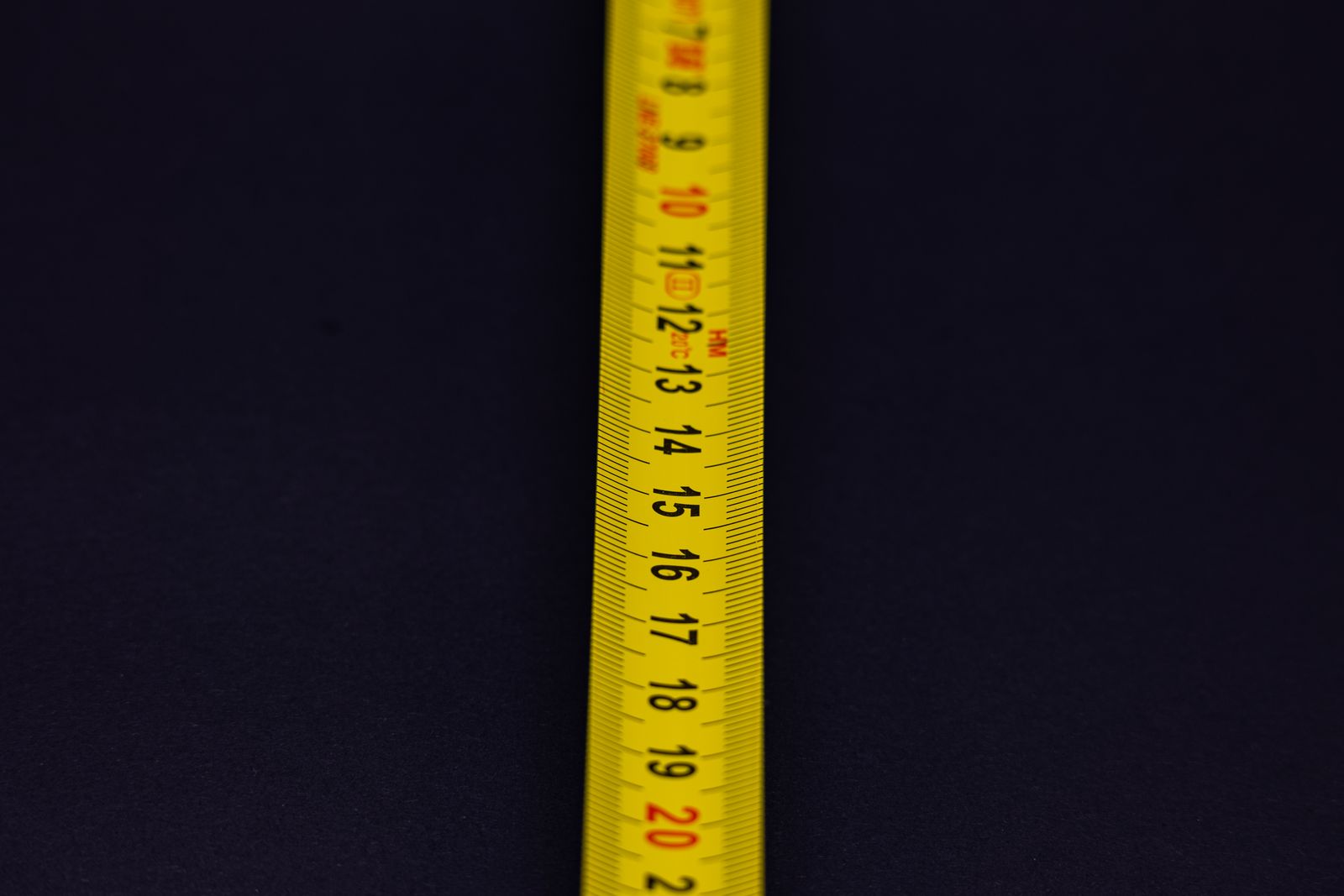
Most conversion guides stop at the formula, but a tape measure gives you the answer with no math at all, if you know how to read it. Find the foot marks on the tape, which are often marked with a larger number and a small ft label, or with a bold mark each 12 inches. Count whole feet first, then count the inches past the last foot mark. For example, if the tape shows 5 feet and then 5 more inches, the length is 5 feet 5 inches, or 65 inches in total. If the tape shows only inches, count groups of 12 inches, since each group is one foot. A mark at 36 inches is 3 feet, a mark at 60 inches is 5 feet, and a mark at 72 inches is 6 feet. For a value between foot marks, read the inch number, then apply the five steps from this guide to get the mixed form. This tape skill also catches calculator slips, since a tape reading and a calculator answer should agree within a small margin. Practice on a door, a table, and a wall, and the conversion will soon feel automatic.
Decimal Feet, Feet Plus Inches, and When to Use Each Form
Decimal feet suit math, spreadsheets, and area work, since a decimal multiplies cleanly with other decimals. For example, a room that is 10.5 feet by 12.25 feet gives an area with one simple multiplication. Feet plus inches suit cutting, building, and shopping, since tapes, saws, and shelves use that form. A cut list that says 5 ft 5 in is ready to mark on a board, while 5.42 feet needs one more step. Science and engineering often use decimal feet, while carpentry and home jobs use mixed feet. When a form asks for feet and gives a decimal box, enter the decimal form, not the mixed form. When a form asks for feet and inches in two boxes, split the answer first, then enter each part alone. Never enter 5.42 into a feet plus inches box as 5 feet 42 inches, since that is a real and costly fault. State the form with the answer, such as 5.42 feet (5 ft 5 in), when the reader could need either form.
For smaller metric steps, see how to convert cm to inches and mm to in.
Frequently Asked Questions
How do I convert inches to feet?
Divide the inch number by 12, since one foot equals 12 inches. For example, 36 inches divided by 12 equals 3 feet. Keep decimals until the last step, then round the final answer and write the unit with it.
How many inches are in a foot?
There are exactly 12 inches in one foot, in both the US customary system and the imperial system. This relation is exact, so it does not change with the size of the job. One yard holds 3 feet, or 36 inches.
What is 20 inches in feet?
20 inches equals 1.67 feet in decimal form, or 1 foot 8 inches in mixed form. Divide 20 by 12 to get 1.6667, then multiply the decimal part by 12 to get 8 inches. Both forms describe the same length.
What is 65 inches in feet?
65 inches equals 5.42 feet in decimal form, or 5 feet 5 inches in mixed form. Divide 65 by 12 to get 5.4167, then multiply 0.4167 by 12 to get 5 inches. This is a common height and furniture size.
What is 72 inches in feet?
72 inches equals exactly 6 feet, since 72 divided by 12 equals 6. Multiples of 12 always give whole feet, with zero inches left over. Use this pattern as a fast check for other values.
How do I convert feet back to inches?
Multiply the feet number by 12 to get inches. For example, 3 feet times 12 equals 36 inches, and 5.5 feet times 12 equals 66 inches. The reverse check catches most division faults at once.
Is 1 inch equal to 0.0833 feet?
Yes, one inch equals about 0.0833 feet, since one divided by 12 equals 0.08333. Use the full division by 12 for exact work, and use 0.0833 only for a quick estimate. The small rounding in 0.0833 can grow on large values.
How do I write feet and inches correctly?
Write feet with ft or a single prime mark, and inches with in or a double prime mark. For example, 5 ft 5 in can also be written as 5 feet 5 inches. Always include both units, so the reader never has to guess.
Why is my inches to feet answer wrong?
The usual faults are multiplying instead of dividing, rounding too early, or mixing decimal feet with mixed feet. Recheck the input, divide by 12, keep four decimals, and round only at the end. Then check the answer against the table in this guide.
Do inches and feet belong to the metric system?
No, inches and feet belong to the US customary and imperial systems, not the metric system. The metric units for length are millimetres, centimetres, and metres. One foot equals exactly 0.3048 metre, and one inch equals exactly 0.0254 metre.
How many feet is 100 inches?
100 inches equals 8.33 feet in decimal form, or 8 feet 4 inches in mixed form. Divide 100 by 12 to get 8.3333, then multiply 0.3333 by 12 to get 4 inches. Round the decimal form to 8.33 feet.
Can I use this conversion for height?
Yes, height in inches converts the same way as any length. Divide total inches by 12, then turn the decimal part into inches. For example, 70 inches is 5 feet 10 inches, and 66 inches is 5 feet 6 inches.
Final Word
Now you know how to convert inches to feet in five easy steps, and you know the errors to avoid. Divide by 12, keep decimals until the end, and write the unit with the answer. Use the calculator above for fast work, the table for quick checks, and the tape measure skill for real rooms and boards. Save this guide for your next home, school, or shop job, and share it with anyone who still guesses at conversions.
Source: Wikipedia