Introduction
“Add one pint of cream.” “Grab a pint of blueberries.” “Serve in a pint glass.” Three sentences, three different pints — and only one of them means exactly 2 cups. The pint is the trickster of the American kitchen: small enough to feel simple, tangled enough to quietly wreck a recipe when you guess wrong.
Most of the confusion comes from the fact that the pint shows up everywhere. It is a dairy carton, a produce basket, a beer glass, and a recipe unit, all wearing the same name. A pint of milk at the store is exactly 2 cups. A pint of strawberries at the farm stand is close to 2 cups — but not quite, because it is measured in a different pint. And the “pint” of beer at your local bar might be a full 16 ounces, or it might be a glass that only holds 16 ounces when filled to the absolute brim.
Here is the good news: the core conversion takes about five seconds to learn, and once you understand the two traps hiding around it, you will never second-guess a pint again. In this complete guide, you get the direct answer, six easy conversion charts (including the fractional and multi-pint rows other sites skip), a cups-to-pints reverse chart, the full cup-to-gallon family ladder, the liquid vs dry vs Imperial pint breakdown, real-world yields for a pint of common ingredients, metric equivalents, four sneaky mistakes to dodge, and answers to the seven questions people actually ask about pints.
Table of Contents
- How Many Cups in a Pint? The Direct Answer
- Chart 1: Pints to Cups Conversion Table
- Chart 2: Cups to Pints Reverse Table
- Chart 3: The Cup–Pint–Quart–Gallon Family Ladder
- Chart 4: Liquid vs Dry vs Imperial Pint
- Chart 5: What a Pint of Common Ingredients Actually Gives You
- Chart 6: Metric Equivalents — Pints in Milliliters and Liters
- 4 Sneaky Mistakes Cooks Make With Pints
- 5 Simple Tips for Measuring Pints Right
- Q&A: Where Did the Pint Come From?
- Frequently Asked Questions
- Conclusion
How Many Cups in a Pint? The Direct Answer
One US liquid pint equals exactly 2 US cups. That is the answer for every standard American recipe, every dairy carton, and every liquid measuring task in a US kitchen. Half a pint is 1 cup. Two pints are 4 cups — which is also 1 quart.
Quick Answer: There are 2 US cups in 1 US liquid pint. The formula is: cups = pints × 2. A pint is 16 fluid ounces, half of a quart, and one-eighth of a gallon.
One US liquid pint contains exactly 2 US cups. To convert pints to cups, multiply the number of pints by 2. A pint equals 16 fluid ounces, 1/2 quart, or 473 milliliters.
The US liquid pint is defined as one-eighth of a US gallon, or 16 US fluid ounces. Since a US cup is 8 fluid ounces, the math resolves without any fractions: 16 ÷ 8 = 2. The National Institute of Standards and Technology fixes the US liquid pint at exactly 473.176473 milliliters, and the US cup at 236.5882365 milliliters — divide the two and you land on precisely 2 (NIST, SP 811).
Why the Pint Deserves More Respect Than It Gets
The pint sits in the sweet middle of kitchen measurements: too big for a tablespoon, too small for a quart. That is exactly why recipes love it — “1 pint of cream” is friendlier than “2 cups of cream,” and “a pint of berries” is friendlier than “approximately 2 cups of loosely packed irregular fruit.” The pint is a human-scale unit, and American food packaging is built around it. Learn it once, and half the dairy aisle and produce section suddenly reads like a conversion chart.
Chart 1: Pints to Cups Conversion Table
This is the chart cooks reach for most: standard pints, the common fractions, and the multi-pint amounts that show up when you scale recipes. Bookmark it.
| Pints | US Cups | Fluid Ounces | Milliliters | Everyday Example |
|---|---|---|---|---|
| 1/4 pint | 1/2 cup | 4 fl oz | 118 ml | A small juice glass |
| 1/2 pint | 1 cup | 8 fl oz | 237 ml | A standard coffee mug |
| 3/4 pint | 1 1/2 cups | 12 fl oz | 355 ml | A soda can’s worth |
| 1 pint | 2 cups | 16 fl oz | 473 ml | Milk or cream carton |
| 1.5 pints | 3 cups | 24 fl oz | 710 ml | Big batch of pancake batter |
| 2 pints (1 quart) | 4 cups | 32 fl oz | 946 ml | Quart of stock |
| 2.5 pints | 5 cups | 40 fl oz | 1,183 ml | Party punch base |
| 3 pints | 6 cups | 48 fl oz | 1,419 ml | Large soup pot starter |
| 4 pints (1/2 gallon) | 8 cups | 64 fl oz | 1,893 ml | Half-gallon milk jug |
| 5 pints | 10 cups | 80 fl oz | 2,366 ml | Canning kettle batch |
| 6 pints | 12 cups | 96 fl oz | 2,839 ml | Big slow-cooker recipe |
| 8 pints (1 gallon) | 16 cups | 128 fl oz | 3,785 ml | Gallon milk jug |
Two pints equal 4 cups, four pints equal 8 cups (half a gallon), and eight pints equal 16 cups (one gallon). Multiply pints by 2 to get cups.
How Many Cups in 2 Pints?
Four cups. Two pints is exactly 1 US quart — the size of a standard quart carton of stock or milk. If a recipe calls for 2 pints of cream, pour in four 1-cup measures and you are done.
How Many Cups in a Half Pint?
One cup. The half pint is one of the most common dairy sizes in American stores — a half-pint carton of cream or milk holds exactly 8 fluid ounces, which is a single US cup.
Q&A: What about 1.5 pints to cups?
Multiply 1.5 by 2 to get 3 cups. Fractional pints confuse people because they try to convert through ounces first. Skip the detour: pints × 2 always works, decimals included.
Chart 2: Cups to Pints Reverse Table
Sometimes the conversion runs the other way: the recipe is written in cups, but the package in your fridge is labeled in pints. Divide cups by 2.
| US Cups | Pints | Fluid Ounces | Milliliters |
|---|---|---|---|
| 1/2 cup | 1/4 pint | 4 fl oz | 118 ml |
| 1 cup | 1/2 pint | 8 fl oz | 237 ml |
| 1 1/2 cups | 3/4 pint | 12 fl oz | 355 ml |
| 2 cups | 1 pint | 16 fl oz | 473 ml |
| 3 cups | 1 1/2 pints | 24 fl oz | 710 ml |
| 4 cups | 2 pints (1 quart) | 32 fl oz | 946 ml |
| 6 cups | 3 pints | 48 fl oz | 1,419 ml |
| 8 cups | 4 pints (1/2 gallon) | 64 fl oz | 1,893 ml |
| 12 cups | 6 pints | 96 fl oz | 2,839 ml |
| 16 cups | 8 pints (1 gallon) | 128 fl oz | 3,785 ml |
To convert cups to pints, divide the number of cups by 2. Four cups equal 2 pints (1 quart); eight cups equal 4 pints (half a gallon).
If you work with the pint’s neighbors often, our cups-to-quarts guide covers the next unit up the ladder, and our cups to ml converter handles the metric side of the same math.
Chart 3: The Cup–Pint–Quart–Gallon Family Ladder
The pint does not live alone. It sits one rung up from the cup in the US customary volume family, and seeing the whole ladder at once is the fastest way to stop second-guessing:
| Unit | Cups | Pints | Quarts | Fluid Ounces | Milliliters |
|---|---|---|---|---|---|
| 1 cup | 1 | 1/2 | 1/4 | 8 | 237 |
| 1 pint | 2 | 1 | 1/2 | 16 | 473 |
| 1 quart | 4 | 2 | 1 | 32 | 946 |
| 1/2 gallon | 8 | 4 | 2 | 64 | 1,893 |
| 1 gallon | 16 | 8 | 4 | 128 | 3,785 |
The classic doubling chain still works: 2 cups in a pint, 2 pints in a quart, 4 quarts in a gallon. Memorize that chain and you can rebuild any conversion in the family from scratch in seconds.
Q&A: How many pints are in a quart?
Two. A quart is defined as 2 pints (4 cups, 32 fluid ounces). Half a gallon holds 4 pints, and a full gallon holds 8 pints.
Q&A: How many pints are in a gallon?
Eight. A gallon breaks down into 4 quarts, and each quart holds 2 pints — so 4 × 2 = 8 pints, which is 16 cups or 128 fluid ounces.
Chart 4: Liquid vs Dry vs Imperial Pint
Here is where the “simple” answer gets its asterisks. The pint you mean depends on what you are measuring and where the recipe came from:
| Pint Type | Definition | US Cups | Milliliters | Where You’ll Meet It |
|---|---|---|---|---|
| US liquid pint | 1/8 US gallon | 2 cups | 473.18 ml | Everyday US recipes, dairy cartons |
| US dry pint | 1/64 US bushel | ≈ 2.33 cups | 550.61 ml | Produce baskets (berries, tomatoes) |
| Imperial pint | 1/8 Imperial gallon | ≈ 2.4 US cups | 568.26 ml | UK recipes, British beer |
| Metric “pint” | Not an official unit | 2 metric cups (250 ml) = 500 ml | 500 ml | Rough metric approximation |
The US liquid pint is what your recipe means 99% of the time. The dry pint survives in produce: a “pint of blueberries” at the store is a dry pint basket — about 16% roomier than the liquid pint your measuring cups assume. The Imperial pint matters when you cook from a British recipe or drink British beer: at 568 ml it is 20% larger than the US pint, which is a real difference in baking. The FDA’s Food Labeling Guide standardizes the US cup for nutrition serving sizes, which is one more reason to default to the US liquid pint in American kitchens.
Q&A: Is a pint of blueberries 2 cups?
Almost. A pint basket of blueberries is a dry pint (550 ml of space), and blueberries pack fairly well, so you will get about 2 to 2¼ cups of berries — roughly 12 ounces by weight. For baking, measure the berries in cups after buying; for jam, weigh them.
Chart 5: What a Pint of Common Ingredients Actually Gives You
A pint is a volume, not a weight — so a pint of feathers and a pint of lead are the same size but very different ingredients. Here is what a pint of the foods people actually buy translates to in practice:
| Ingredient (1 pint) | Practical Yield | Weight (approx.) | Notes |
|---|---|---|---|
| Milk or water | 2 cups | 1 lb (16 oz) | Density ≈ 1, so it tracks cleanly |
| Heavy cream | 2 cups | ≈ 1 lb | Whipped, it roughly doubles in volume |
| Half-and-half | 2 cups | ≈ 1 lb | Standard small dairy carton |
| Sour cream (16-oz tub) | 2 cups | 1 lb | Tub labeled 16 oz = 1 pint exactly |
| Ice cream (pint tub) | 2 cups | 10–12 oz | Whipped-in air makes it light |
| Strawberries (pint basket) | ~2 cups whole | ~12 oz (0.75 lb) | Dry pint basket; hull before measuring |
| Blueberries (pint basket) | ~2–2.25 cups | ~12 oz (0.75 lb) | Dry pint basket; packs better than strawberries |
| Cherry tomatoes (pint basket) | ~2 cups | ~10–12 oz | Dry pint basket |
| Beer (US “pint” pour) | 2 cups if a true 16-oz pour | 16 fl oz | Many bar glasses hold less — see Mistake 3 |
A pint of milk or heavy cream equals 2 cups and weighs about 1 pound. A pint basket of strawberries or blueberries holds roughly 2 cups of fruit (about 12 ounces), and a pint tub of ice cream scoops to 2 cups.
How Many Cups in a Pint of Milk?
Exactly 2 cups. A pint carton of milk holds 16 fluid ounces, and at milk’s density that weighs just about 1 pound. Half-pint cartons — the classic school-lunch size — hold 1 cup.
How Many Cups in a Pint of Ice Cream?
Two cups by volume. A standard US ice cream pint is 473 ml, the same as any liquid pint. Because air is whipped in during churning, it weighs less than a pint of milk — usually 10 to 12 ounces — so never substitute ice cream by weight in a recipe that wants volume.
Chart 6: Metric Equivalents — Pints in Milliliters and Liters
For cooks working between US recipes and metric tools:
- 1 US liquid pint = 473.18 ml = 0.473 liters (just under half a liter — a handy shortcut is “a pint is half a liter minus a tablespoon”)
- 1 liter = 2.113 US liquid pints = 4.227 US cups
- 1 US cup = 236.59 ml, so 2 cups = 473.18 ml — the math checks out
- 1 Imperial pint = 568.26 ml = 0.568 liters
- 1 US dry pint = 550.61 ml = 0.551 liters
If your recipe is fully metric and your tools are in cups, start with our liters to cups converter to translate precisely, then use the pint tables above for scaling.
Q&A: Is a pint the same as half a liter?
Close, but not exact. A US liquid pint (473 ml) is about 5% smaller than half a liter (500 ml). For soups, sauces, and drinks the difference is negligible. For baking and canning — where ratios decide the outcome — measure precisely instead of swapping one for the other.
4 Sneaky Mistakes Cooks Make With Pints
The conversion itself is easy; the mistakes come from everything around it. These are the four that actually cause trouble:
Mistake 1: Using the Imperial Pint in a US Recipe
An Imperial pint is 568 ml versus the US pint’s 473 ml — nearly half a cup of extra liquid per pint. Follow a British recipe’s “2 pints of stock” with US measuring tools (or the reverse) and your soup’s seasoning, thickness, and cooking time all drift. The fix: check the recipe’s origin. UK, Australia, or Ireland? Assume the Imperial pint and scale up 20%, or convert everything to milliliters and measure metric. Our tablespoons to cups guide covers the smaller-unit side of the same international confusion.
Mistake 2: Treating a Produce Pint Basket as 2 Level Cups
A pint basket of berries is a dry pint — about 16% roomier than the liquid pint your measuring cups assume. Whole fruit also does not pack perfectly: a “pint of strawberries” fills roughly 2 cups with whole berries but settles to about 1¾ cups once hulled and sliced. For jam, pie filling, or any recipe where the fruit ratio matters, weigh the berries instead of counting baskets. Strawberries and blueberries both run about 12 ounces per pint basket.
Mistake 3: Trusting the Bar’s “Pint Glass”
In the US, a standard shaker “pint” glass holds 16 ounces only when filled to the absolute brim — and a proper beer pour leaves headroom for foam. Many bars serve 12–14 ounces in a glass shaped like a pint. If a recipe or a homebrew calculation calls for “a pint of beer,” measure 16 fluid ounces (2 cups) with a real measuring cup instead of eyeballing a glass. In the UK, the pour is a true Imperial pint — 20 ounces — which is why British recipes and American kitchens so often disagree.
Mistake 4: Mixing Up “Half Cups in a Pint” and “Cups in a Half Pint”
These two questions sound almost identical and have completely different answers. “How many half-cups in a pint?” means how many ½-cup units fit in a pint: 4 (a pint is 2 cups, and each cup holds two half-cups). “How many cups in a half pint?” means half of a pint expressed in cups: 1. Same words, different order, different answer. When a recipe’s phrasing feels ambiguous, re-read it once before you pour — this two-second check saves more dishes than any conversion chart.
5 Simple Tips for Measuring Pints Right
- Memorize the doubling chain, not just the answer. “2 cups in a pint, 2 pints in a quart, 4 quarts in a gallon” lets you rebuild any conversion from scratch — far more reliable than memorizing a dozen separate facts.
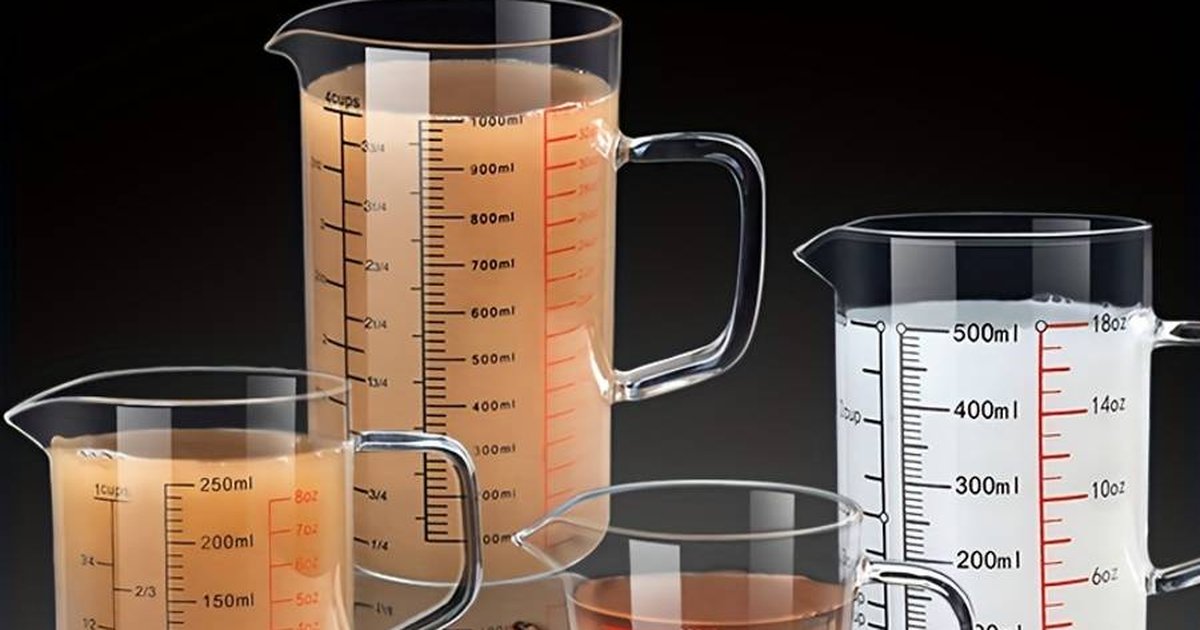
- Measure liquids in liquid measures. A glass measuring jug with a spout, read at eye level, beats scooping with dry cups. Read the bottom of the meniscus curve for the true volume.
- Mark your own pint line. Pour 2 cups of water into your favorite pitcher and mark the pint line with a permanent marker. You will never look it up again.
- When scaling, convert everything to cups first. Cups are the common denominator of US recipes. Convert pints and quarts to cups, do your doubling or halving, and only convert back if the recipe demands it.
- For canning and baking, go metric. Pints and cups are perfect for everyday cooking, but when precision decides the outcome, 473 ml on a kitchen scale (1 ml of water = 1 gram) removes all doubt. For tested canning ratios, follow the National Center for Home Food Preservation guidelines. And if your recipe crosses between weight and volume, our ounces to cups converter explains the fluid-vs-dry ounce trap that metric sidesteps entirely.
Q&A: Where Did the Pint Come From?
The word “pint” traveled through Old French pinte into English centuries ago, and one long-standing theory traces it further back to the Latin pincta, meaning “painted” — a reference to the painted marks on old measuring vessels. Whether or not that etymology holds up, the idea is right: the pint began as a marked container, not an abstract number. It traveled from medieval ale and wine measures through colonial America, where the US fixed its gallon at 231 cubic inches while Britain redefined theirs in 1824 — the split that created the US vs Imperial pint gap. The National Institute of Standards and Technology still maintains the exact metric definitions of these customary units in Special Publication 811.
Frequently Asked Questions
How many cups in a pint?
Exactly 2 US cups in 1 US liquid pint. Multiply pints by 2 to convert.
How many cups in a half pint?
1 cup. A half pint is 8 fluid ounces — the classic small dairy carton size.
How many cups in 2 pints?
4 cups. Two pints equal 1 US quart.
How many ounces in a pint?
16 fluid ounces in a US liquid pint; about 12 ounces by weight for a pint basket of berries.
How many pints in a quart?
2 pints. A pint is half a quart.
How many pints in a gallon?
8 pints. A gallon holds 4 quarts, and each quart holds 2 pints.
Is a UK pint the same as a US pint?
No. A UK (Imperial) pint is 568 ml — about 2.4 US cups — while a US liquid pint is 473 ml (2 US cups). Check the recipe’s origin before measuring.
Conclusion
One US liquid pint = 2 US cups. That single fact, plus the chain “2 cups in a pint, 2 pints in a quart, 4 quarts in a gallon,” covers nearly every pint conversion a cook will ever face. Keep the six charts above bookmarked for the fractional, reverse, and ingredient-specific cases, watch out for the dry-basket and Imperial-pint traps, and convert to cups before scaling any recipe.
If this guide saved you a ruined batch, the rest of the kitchen-conversion library is one click away: continue up the ladder with how many cups are in a quart, or nail the smaller units with how many ounces are in a cup.