
How to convert yards to meters is simple once you know the exact factor, and this guide gives you that factor right away. One yard equals exactly 0.9144 meters, so you convert yards to meters by multiplying the yards by 0.9144. For example, 10 yards equals 9.144 meters, because 10 times 0.9144 gives 9.144. For daily use, you can multiply by 0.91 for a fast estimate, but the exact factor is better for homework, sewing, building work, and sports fields. This guide shows you how to convert yards to meters in 5 easy steps, with a table, worked examples, and the errors that cause wrong answers.
How to convert yards to meters comes up in many real tasks, from fabric and garden plans to running tracks and house plots. Many people in the United States learn yards at school or on a sports field, while meters are used in science, in most other countries, and in many product labels. A clear method saves time, and it stops small mistakes from growing into large ones on a long distance. You will finish this guide with a calculator, a table, and a checklist you can use every time. You will also know when to use the exact factor and when a short estimate is safe.
Contents
- The Simple Formula for How to Convert Yards to Meters
- Yards to Meters Conversion Table
- How to Convert Yards to Meters in 5 Easy Steps
- How to Convert Yards to Meters for Fabric, Gardens, and Sports
- Mistakes That Make Yards to Meters Go Wrong
- Yards, Feet, Inches, and Miles in One System
- Verified Numbers You Can Trust for Yards to Meters
- Yard to Meter Tape Check Without a Calculator
- Estimating Yards to Meters in Your Head
- Quick Checklist for Yards to Meters
- Frequently Asked Questions About How to Convert Yards to Meters
- Final Word
ANSWER BOX 1:
To convert yards to meters, multiply the yards by 0.9144 for the exact answer. For a quick estimate, multiply by 0.91 instead, and you will stay close to the exact answer. Use the exact factor for school work, sewing, building, and any task where a small error matters.
Yards to Meters Calculator
10 yards = 9.144 meters
Worked checks: 10 yards = 9.144 meters. 100 yards = 91.44 meters. Reverse check: 100 meters = 109.36133 yards.
ANSWER BOX 2:
The reverse method for how to convert yards to meters is just as simple, and it helps when a label or a plan gives meters. To convert meters to yards, divide the meters by 0.9144, and the result is the distance in yards. For example, 100 meters divided by 0.9144 gives 109.36133 yards, which rounds to 109.36 yards for daily use.
Contents:
- The Simple Formula for How to Convert Yards to Meters
- Yards to Meters Conversion Table
- How to Convert Yards to Meters in 5 Easy Steps
- How to Convert Yards to Meters for Fabric, Gardens, and Sports
- Mistakes That Make Yards to Meters Go Wrong
- Yards, Feet, Inches, and Miles in One System
- Verified Numbers You Can Trust for Yards to Meters
- Yard to Meter Tape Check Without a Calculator
- Estimating Yards to Meters in Your Head
- Quick Checklist for Yards to Meters
- Frequently Asked Questions About How to Convert Yards to Meters
- Final Word
The Simple Formula for How to Convert Yards to Meters
The formula for how to convert yards to meters has just one step, and it never changes from task to task. You take the number of yards and multiply it by 0.9144, and the result is the distance in meters. For example, 20 yards times 0.9144 gives 18.288 meters, which rounds to 18.29 meters for daily use. Keep the full factor for exact work, and round only at the end so your answer stays true to the exact value.
The reverse method is simple when a plan, a label, or a race result gives meters. You take the number of meters and divide it by 0.9144, and the result is the distance in yards. For example, 50 meters divided by 0.9144 gives 54.68066 yards, which rounds to 54.68 yards for daily use. If you learn both directions, you can switch fast in either case, and you will never feel stuck when a task mixes yards and meters.
One more link in the chain helps when a task gives feet or inches instead of yards. One yard equals 3 feet, and one yard equals 36 inches, so you can first change feet or inches into yards and then use the same factor. For example, 30 feet equals 10 yards, and 10 yards equals 9.144 meters by the same method. This chain keeps every length task on one simple path, and it stops you from learning a new rule for each unit.
Yards to Meters Conversion Table
A table for how to convert yards to meters saves time when you need a common distance at a glance, and it also helps you spot errors in your own work. The table below uses the exact factor 0.9144, and the meters column is rounded to two decimals for easy reading. Use the exact factor in the calculation when you need more than two decimals, such as for building work or school answers.
| Yards | Meters |
|---|---|
| 1 yard | 0.91 meters |
| 2 yards | 1.83 meters |
| 5 yards | 4.57 meters |
| 10 yards | 9.14 meters |
| 20 yards | 18.29 meters |
| 25 yards | 22.86 meters |
| 50 yards | 45.72 meters |
| 100 yards | 91.44 meters |
| 200 yards | 182.88 meters |
| 500 yards | 457.20 meters |
| 1,000 yards | 914.40 meters |
| 1,760 yards | 1,609.34 meters |
The last row of the table is worth a second look, because it links yards to miles in a useful way. One mile equals 1,760 yards, and 1,760 yards equals 1,609.34 meters by the exact factor. That result matches the known mile in meters, and it gives you a fast check for any long distance. If your answer for a mile is far from 1,609 meters, you know at once that a step went wrong.
How to Convert Yards to Meters in 5 Easy Steps
Step 1 is to write down the yards you need to change, and to check that the number is really in yards. Many errors start here, because a task may give feet, inches, or meters mixed with yards. Read the unit word with care, and change feet or inches into yards first if you must. For example, 36 inches equals 1 yard, and 9 feet equals 3 yards, so a short check at this step saves a wrong answer later.
Step 2 is to use the exact factor 0.9144, and to keep that factor in full until the last step. Do not round the factor to 0.9 at the start, because that small change grows on long distances. For example, 100 yards times 0.9 gives 90 meters, while the exact answer is 91.44 meters, so the short factor is off by 1.44 meters. The exact factor costs no extra time, and it keeps your answer true for school, sewing, and building work.
Step 3 is to multiply the yards by 0.9144, and to write the full result before you round it. For example, 25 yards times 0.9144 gives 22.86 meters, and 40 yards times 0.9144 gives 36.576 meters. A calculator helps here, and the calculator in this guide uses the same exact factor. Write the full result first, so you can see if the answer looks sane before you round it down.
Step 4 is to round the answer to a sensible number of decimals for your task, and to keep the unit word meters with the number. Two decimals suit most daily tasks, such as fabric, gardens, and sports plans, while school work may ask for three or four decimals. For example, 36.576 meters rounds to 36.58 meters at two decimals, and that form is easy to read and use. Never drop the unit word, because a bare number tells no one what it means.
Step 5 is to check your answer with a second method, and this step is the one most people skip. You can divide your meters answer by 0.9144, and you should get back to your starting yards. For example, 22.86 meters divided by 0.9144 gives 25 yards again, so the round trip proves the work. You can also check with the table in this guide, and a large gap between your answer and the table means a step went wrong.
How to Convert Yards to Meters for Fabric, Gardens, and Sports
Fabric work is one of the most common places where you need to know how to convert yards to meters, and the stakes are real. A sewing pattern may list fabric in yards, while a shop label lists meters, and buying the wrong length wastes cloth and money. For example, a pattern that needs 3 yards needs 2.7432 meters, which rounds to 2.74 meters, so you should buy at least that length. Always buy a small extra length for cuts and seams, and never round down when you buy cloth.
Garden and home plots also mix yards and meters, and the same method works for paths, fences, and lawn edges. A garden path of 15 yards equals 13.716 meters, which rounds to 13.72 meters, and that length helps you order edging or paving. A fence run of 60 yards equals 54.864 meters, which rounds to 54.86 meters, and that figure helps you count posts and panels. When you order material by the meter, round up to the next full meter so you do not fall short on site.
Sports give a third common case, and the numbers here are easy to check against known marks. A 100 yard dash equals 91.44 meters, which is close to a 100 meter dash but not the same race. A football field in the United States is 100 yards between goal lines, and that length equals 91.44 meters. A running track lap of 400 meters equals 437.45 yards, and that reverse check shows why track events feel longer in yards than in meters.
Mistakes That Make Yards to Meters Go Wrong
The first mistake in how to convert yards to meters is to treat one yard as one meter, and this error is common because the two units look close. One yard is 0.9144 meters, so it is about 8.5 percent shorter than one meter, and that gap grows fast. For example, 100 yards is 91.44 meters, not 100 meters, so a 1 to 1 guess is off by 8.56 meters. Never use a 1 to 1 swap unless you only need a rough guess and you say so plainly.
The second mistake is to mix yards with feet, and this error happens when a task gives both units at once. A distance of 5 yards and 2 feet is not 5.2 yards, because 2 feet equals two thirds of a yard. The correct total is 5.67 yards, and 5.67 yards equals 5.18 meters by the exact factor. Always change feet into yards first, by dividing the feet by 3, and only then multiply by 0.9144.
The third mistake is to round too early, and this error hurts most on long distances and on repeated steps. If you round 0.9144 to 0.91 at the start, a 500 yard distance comes out as 455 meters instead of 457.20 meters, so you lose 2.20 meters. Keep the full factor through every step, and round only the final answer to the decimals your task needs. This one habit fixes a large share of wrong answers.
The fourth mistake is to forget the reverse direction, and this error shows up when a plan gives meters but you think in yards. A 200 meter path is not 200 yards, because 200 meters divided by 0.9144 gives 218.72 yards. Always check which unit you start with, and pick multiply for yards to meters and divide for meters to yards. A quick unit check at the start stops this whole class of errors.
Yards, Feet, Inches, and Miles in One System
Yards sit in the middle of the United States customary length system, and that place makes them easy to link with other units. One yard equals 3 feet, one foot equals 12 inches, and one yard therefore equals 36 inches. One mile equals 1,760 yards, one mile equals 5,280 feet, and one mile equals 1,609.34 meters by the exact factor. These links let you move from any unit to any other unit in two short steps at most, and they are useful when you need to know how to convert yards to meters.
Feet to meters is a useful side path, because many room plans and height charts use feet. One foot equals 0.3048 meters exactly, and that factor comes from the same 1959 agreement as the yard factor. For example, 10 feet equals 3.048 meters, and 10 feet also equals 3.33 yards, which times 0.9144 gives 3.048 meters again. Both paths agree, and that agreement is a strong check that your factors are right.
Inches to meters is a second side path, and it helps with small parts, screens, and craft work. One inch equals 0.0254 meters exactly, which is the same as 2.54 centimeters, and 36 inches therefore equals 0.9144 meters. For example, 72 inches equals 2 yards, and 2 yards equals 1.8288 meters, which matches 72 times 0.0254. When two paths give the same answer, you can trust the result and move on.
Verified Numbers You Can Trust for Yards to Meters
The core number for how to convert yards to meters is exact, not rounded, and it rests on an international agreement that stands today. Representatives of six nations, Australia, Canada, New Zealand, South Africa, the United Kingdom, and the United States, agreed on 1 July 1959 that one yard equals exactly 0.9144 meters. The United States National Bureau of Standards put that agreement into effect on the same date, and the United Kingdom ratified it through the Weights and Measures Act 1963. This history comes from the United States Metric Association summary of the 1959 refinement, which cites the National Bureau of Standards announcement.
The second verified number is the link between yards and miles, which is fixed by definition in the same system. One mile equals 1,760 yards, and 1,760 yards times 0.9144 gives 1,609.344 meters, which rounds to 1,609.34 meters. That figure is the standard mile in meters, and it appears in the same conversion tables as the yard factor. If a source gives a mile far from 1,609 meters, that source is using a different mile or a rounded factor, and you should not mix it with the exact yard factor.
The third verified number concerns the old survey yard, which is slightly longer than the international yard and still appears in some United States survey records. One survey yard equals about 0.9144018288 meters, which is only about 0.0000018 meters longer than the international yard. The difference is tiny for daily tasks, but it matters for land surveys, so survey work should name which yard it uses. For school, sewing, garden, and sports tasks, the international yard at 0.9144 meters is the right factor, and this guide uses it throughout.
Yard to Meter Tape Check Without a Calculator
This section on how to convert yards to meters is the one most guides skip, and it gives you a way to check a conversion with your hands and a tape. Start with a tape measure that shows both inches and centimeters, and mark a length of 36 inches on the floor with tape. That mark is exactly one yard, and the same mark should read 91.44 centimeters on the metric side of the tape. This simple check proves the factor in real life, and it also proves that your tape is true.
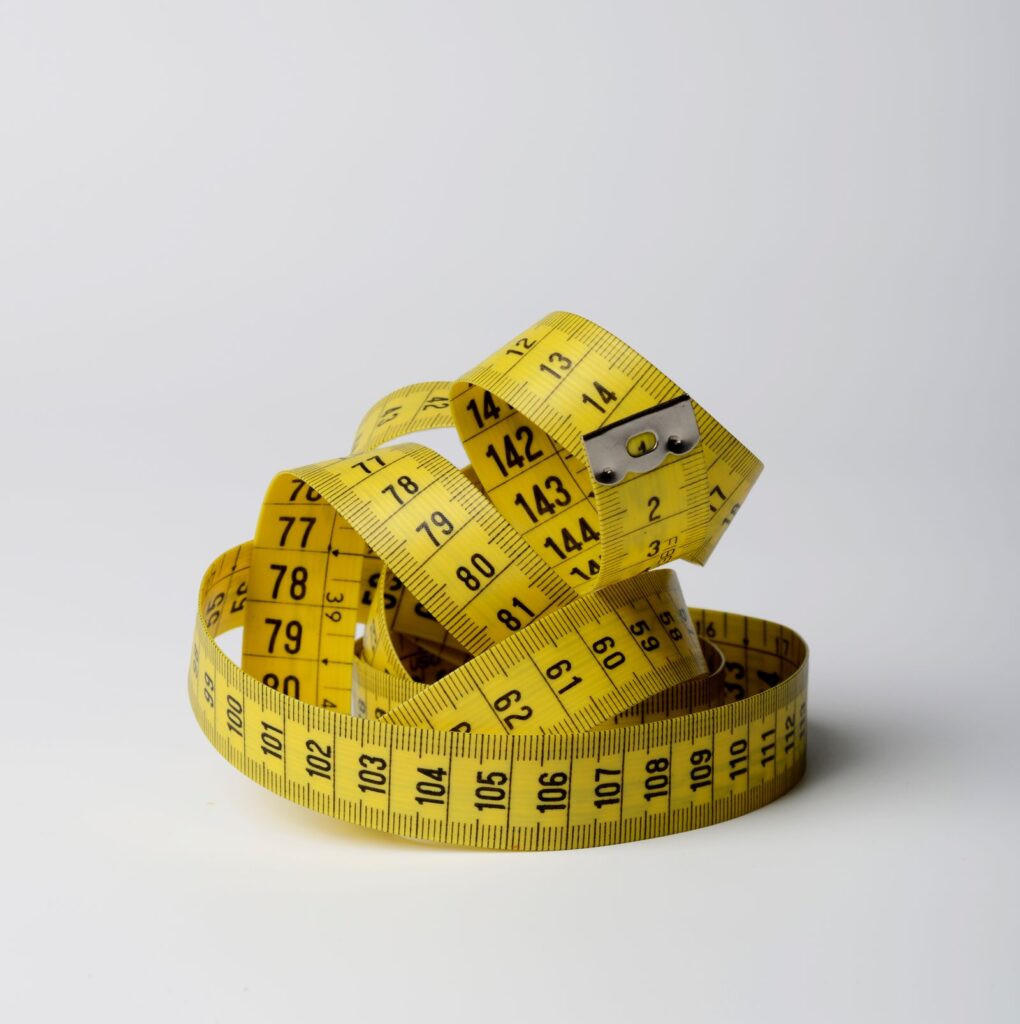
Next, mark 10 yards on a long path or a garden edge, using the same tape in steps of one yard at a time. Ten yards should read 9.144 meters on a metric tape, and a metric wheel or a long metric tape should agree within a few centimeters. If your marks differ by more than a few centimeters, check for tape sag, a loose tape end, or a step counted twice. This field check catches counting errors that a calculator cannot see, because a calculator trusts the number you type.
Finally, use a known sports mark as a free check when no tape is at hand. A 100 yard field mark should sit at 91.44 meters, and a 50 yard line should sit at 45.72 meters from the goal line. Walk the field with a phone map or a metric wheel if you have one, and compare the two readings. When the field marks and your conversion agree, you can trust both, and you have learned the factor by sight as well as by number.
Estimating Yards to Meters in Your Head
A fast estimate for how to convert yards to meters helps when no calculator is near, and the safest short factor is 0.91 for yards to meters. To estimate, multiply the yards by 0.91, or take away about one eleventh of the yards from the yards number. For example, 40 yards minus about 3.6 gives 36.4 meters, while the exact answer is 36.576 meters, so the estimate is close. This method suits shopping, walking plans, and rough garden work, but not school answers or paid building work.
A second mental method uses the 10 yard block, which is easy to remember and easy to scale. Ten yards equals 9.144 meters, so 30 yards equals 27.432 meters by three blocks, and 70 yards equals 64.008 meters by seven blocks. You can add blocks for any tens number, and then add single yards at 0.9144 each for the rest. For example, 43 yards equals four 10 yard blocks plus 3 yards, which is 36.576 plus 2.7432, giving 39.3192 meters.
A third mental check works in reverse, and it helps you judge whether a metric answer looks sane. One meter is a little longer than one yard, so a meters answer for the same distance should be a little smaller than the yards number. For example, 50 yards should give fewer than 50 meters, and the exact answer is 45.72 meters, which passes the check. If your answer in meters is larger than your yards number, you have divided instead of multiplied, and you should redo the step.
Quick Checklist for Yards to Meters
Use this checklist each time you convert, and tick each step before you trust the answer. First, confirm the unit is really yards, and change feet or inches into yards if the task mixes units. Second, use the exact factor 0.9144, and keep it in full until the final rounding step. Third, multiply yards by 0.9144 for meters, or divide meters by 0.9144 for yards, and write the full result first. Fourth, round only the final answer, to two decimals for daily tasks or to the decimals your task asks for. Fifth, check the answer by the reverse trip or by the table, and fix any large gap before you use the number.
Keep this checklist for how to convert yards to meters with your calculation, your sewing notes, or your garden plan, so the method stays the same each time. A fixed method beats a fresh guess, and it also makes it easy to spot where a past answer went wrong. When a friend asks how you got a number, you can show the five steps, and they can repeat the same steps and get the same answer. That repeat test is the real sign of a good conversion method.
Frequently Asked Questions About How to Convert Yards to Meters
How do I convert yards to meters?
To convert yards to meters, multiply the yards by 0.9144, and the result is the distance in meters. For example, 10 yards times 0.9144 gives 9.144 meters, which is the exact answer for that distance. Keep the full factor until the final step, and round only at the end for a clean result. The calculator in this guide uses the same factor, so it will agree with your hand work.
What is the formula for how to convert yards to meters?
The formula for how to convert yards to meters is meters equals yards times 0.9144, and it works for any distance. You put the yards in, multiply by 0.9144, and read the result as meters. For example, 30 yards times 0.9144 gives 27.432 meters, which rounds to 27.43 meters. This one formula covers fabric, gardens, sports, and school work alike.
How many meters is 1 yard?
One yard equals exactly 0.9144 meters, and that value is fixed by the international agreement of 1959. For daily talk, you can say one yard is about 0.91 meters, and most people will grasp the size at once. For exact work, keep the full value of 0.9144, since rounding early adds error on long distances. This single value is the base for all yards to meters sums in this guide.
How many meters is 10 yards?
Ten yards equals 9.144 meters, because 10 times 0.9144 gives 9.144 meters with no rounding needed. This is a handy block size, since you can scale it up for longer distances with ease. For example, 20 yards is two blocks at 18.288 meters, and 50 yards is five blocks at 45.72 meters. Use the 10 yard block when you need a fast mental check.
How many meters is 100 yards?
One hundred yards equals 91.44 meters, because 100 times 0.9144 gives 91.44 meters exactly. This is the length of a United States football field between goal lines, so it is easy to picture. It is also close to a 100 meter dash, but the two races are not the same length. Never swap 100 yards with 100 meters in a race plan, since the gap is 8.56 meters.
How many yards is 100 meters?
One hundred meters equals 109.36133 yards, because 100 divided by 0.9144 gives that result. For daily use, you can say 100 meters is about 109.36 yards, and that form is easy to read. This reverse check is useful for tracks, pools, and race plans that list meters. The calculator in this guide gives the reverse answer in one click.
How do I convert yards to meters quickly?
For a quick answer, multiply the yards by 0.91, and you will land close to the exact meters. This short factor suits rough plans, casual talk, and quick shopping guesses. For school work, sewing, and building work, use the full factor of 0.9144 instead. The calculator above gives the exact result in seconds when you need it.
How many feet are in a yard?
One yard equals 3 feet, and one foot equals 12 inches, so one yard equals 36 inches in total. This link helps when a task gives feet but you need yards first. For example, 15 feet divided by 3 gives 5 yards, and 5 yards times 0.9144 gives 4.572 meters. Always change feet into yards first when a task mixes units, so the meter step stays clean.
How many yards are in a mile?
One mile equals 1,760 yards, and that link is fixed by definition in the United States customary system. By the exact factor, 1,760 yards equals 1,609.344 meters, which rounds to 1,609.34 meters. This mile check is a strong test for any long conversion, since a far off answer means a step went wrong. Use it when you plan walks, runs, or road distances.
Is a yard longer than a meter?
No, a yard is shorter than a meter, since one yard equals only 0.9144 meters. A meter is about 9.4 percent longer than a yard, so a distance in meters should look smaller than the same distance in yards. For example, 50 yards equals 45.72 meters, which is fewer meters than yards, as it should be. If your meters answer is larger than your yards number, you divided instead of multiplied.
What is the difference between a yard and a survey yard?
The international yard equals exactly 0.9144 meters, while the survey yard equals about 0.9144018288 meters. The gap is only about 0.0000018 meters, so it makes no difference for daily tasks like sewing or sports. It matters for land surveys, where old records may use the survey yard and new work uses the international yard. For this guide, and for most tasks, use the international yard at 0.9144 meters.
Can I convert yards to meters on my phone?
Yes, your phone calculator can do it, since you only need to multiply by 0.9144. Type the yards, multiply by 0.9144, and read the result as meters for a fast answer. The calculator in this guide does the same sum, and it also checks the reverse direction. For trips with no signal, learn the 0.91 estimate, so you can still judge a distance with ease.
How do I convert meters back to yards?
To turn meters into yards, divide the meters by 0.9144, which is the exact reverse factor. For example, 200 meters divided by 0.9144 gives 218.72266 yards, which rounds to 218.72 yards. This reverse step is the mirror of yards to meters, and it uses the same 1959 standard. Our reverse guide covers meters to feet in full, and it links from the Final Word below.
How many meters is 5 yards?
Five yards equals 4.572 meters, because 5 times 0.9144 gives 4.572 meters with no rounding needed. This is a common fabric length, since many patterns ask for 5 yards of cloth. If you shop by the meter, buy at least 4.57 meters, and add a small extra length for cuts. Use the exact factor for fabric, since a short buy wastes a whole trip.
How many meters is 20 yards?
Twenty yards equals 18.288 meters, because 20 times 0.9144 gives 18.288 meters exactly. For daily use, you can say 20 yards is about 18.29 meters, and that form is easy to read. This length suits garden paths, short fence runs, and practice fields. Check it against the table in this guide, and you will see the same figure at a glance.
Final Word
How to convert yards to meters is a skill you will use again and again, in sewing rooms, gardens, classrooms, and sports fields. Learn the exact factor of 0.9144, check each result by the reverse trip, and label every answer as meters before you share it. For related length changes, read our guides to how to convert meters to feet, miles to kilometers, kilometers to miles, how to convert feet to inches, and how to convert inches to feet. If your plan also needs weight or volume, our kitchen guides will help you link length, weight, and cups in one clear step.
Start with one real distance, one fabric length, or one garden path, and run the 5 easy steps from this guide on it. Check the result against the table, and use the checklist before you act on the number. With that habit, how to convert yards to meters will feel simple, and the errors in this guide will stay far from your plans. Happy measuring, steady numbers, and clear lengths in every project you take on.
Learn more: Yard on Wikipedia